
.svg)
How to Get Your Products Recommended by AI (ChatGPT, Google AI & More)


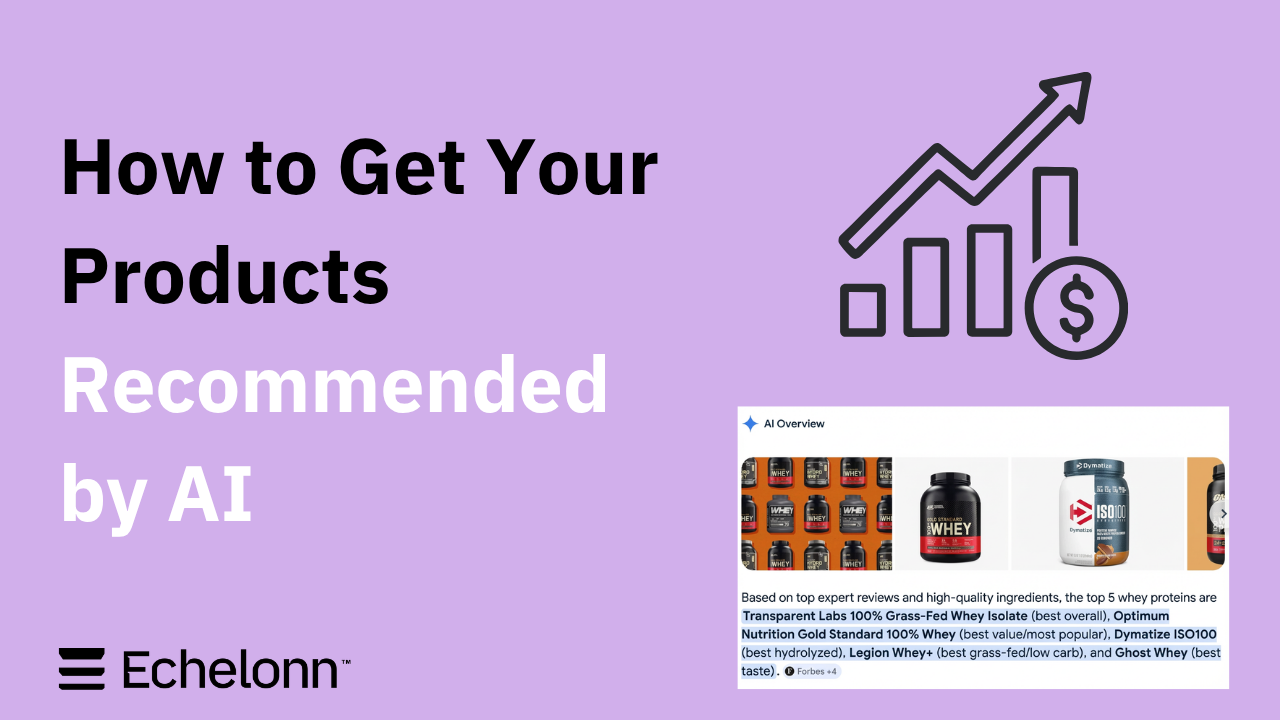
Ranking in AI has always been a recurring topic in the eCommerce space – but most brands are still underestimating how significant the shift is. The volume and depth of data these models are trained on is already extensive – and in many cases goes beyond what platforms like Meta have historically had access to. Users are no longer just searching. They are asking questions, comparing options, sharing their thoughts, frustrations, and plans, and making decisions within a single response. This creates a level of targeting and personalisation that traditional platforms cannot fully replicate.
This is becoming more relevant as AI platforms begin to introduce monetisation layers. ChatGPT is already exploring ads, while Google has started integrating product recommendations into AI Overviews and AI Mode. In both cases, visibility is no longer just about ranking – it’s about being selected as part of the answer. So the question is – how do you get your products recommended in AI search results?
The most important thing to understand is that traditional SEO principles remain the foundation of how AI visibility works. These systems rely on authoritative sources and surface brands with strong, consistent signals across the web. AI bots trust the same things Google bots do – quality and clarity of content, credible third-party mentions, structured information, and consistent review signals. If those signals are weak or fragmented, the system simply has no reliable basis to recommend you. So if your brand is not visible in AI search results, it typically comes down to two core issues.
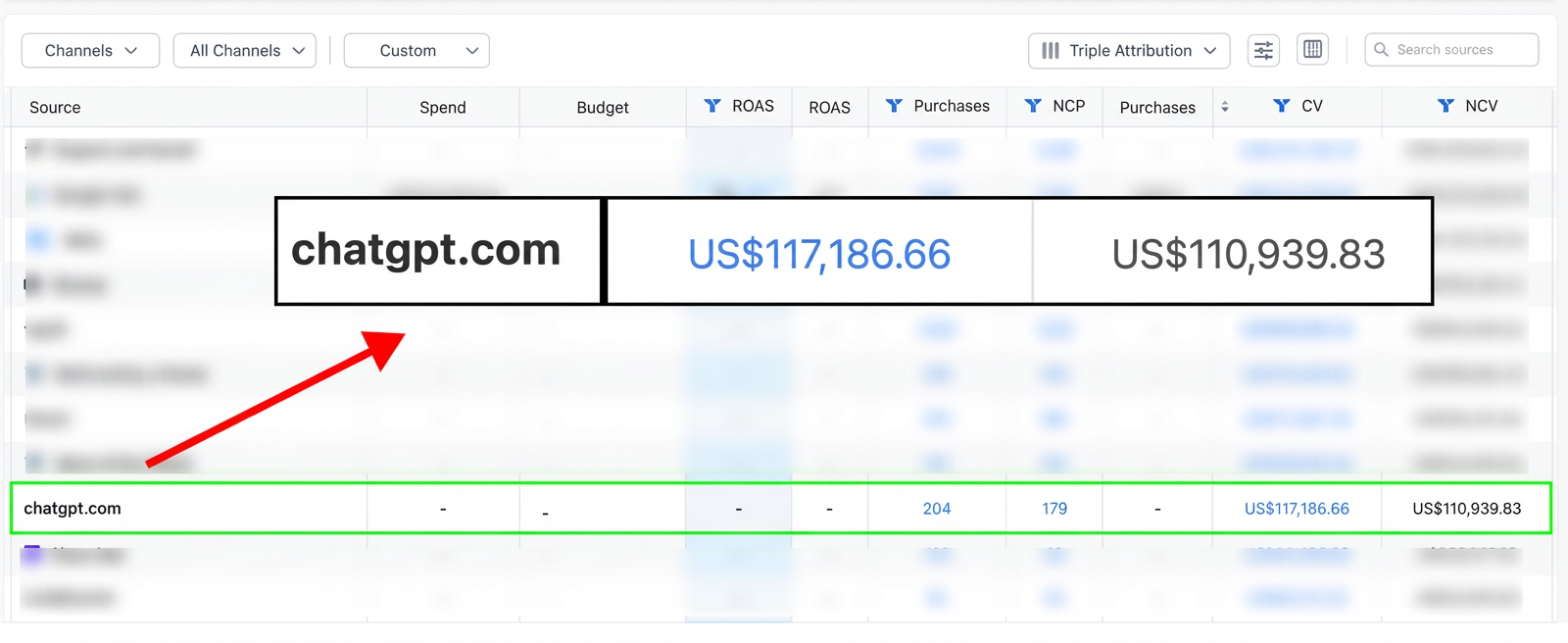
Why Your Products Don’t Show Up in AI Search Results
The answer is usually more obvious than you might think: There simply isn’t enough information about your brand for the AI models to find and confidently include it.
So the first core issue is a lack of sufficient data. AI models build their understanding of products and brands by collecting information from across the web – including product pages, articles, reviews, and forum discussions. If your brand has a limited footprint across these sources, the model either doesn’t recognise it or doesn’t have enough information to trust it and include it in a recommendation. This is primarily a visibility problem, not a ranking one.
Even well-performing brands in Google Ads or organic search can be absent from AI results if their presence outside their own site is too limited or inconsistent. From a performance perspective, this limits how much demand you capture before users enter your funnel.
The second issue is a lack of structured and consistent information. AI systems rely on clarity. If product details, positioning, or claims are fragmented, outdated, or inconsistent across sources, the model ignores that information. This often happens when product specifications differ across pages, older versions of content remain indexed, messaging is misaligned across channels, or structured data is missing or incomplete.
When this happens, the model is less likely to use your content as a reliable source. Instead, it defaults to brands with clearer and more structured signals. Across multiple accounts, we’ve seen that brands with broader and more structured data footprints are consistently more likely to appear in AI-generated answers.
Over time, this creates a compounding effect. Brands with clearer, more structured data become easier to reference, while others gradually lose visibility. This impacts not just whether you appear in AI results, but how consistently your brand is included in high-intent queries – which directly affects traffic quality and conversion potential.
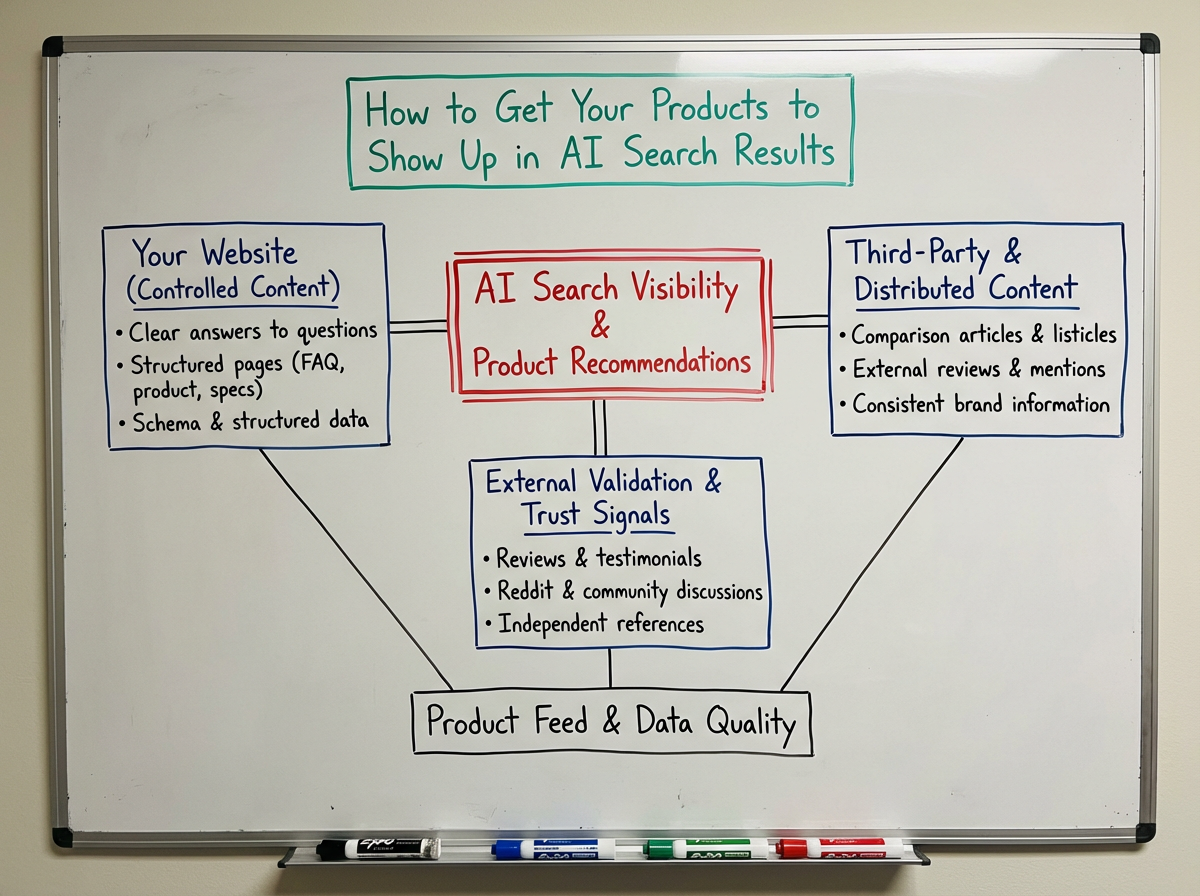
How to Get Your Products to Show Up in AI Search Results
Optimize Your Existing Content for AI Models
The starting point should be optimizing your content for AI – LLMs prioritise content that answers specific questions immediately, clearly and without ambiguity. If the answer is buried deep in your content or requires context elsewhere, AI models will often prefer sources that state it upfront.
In many cases, your pages already contain the right information – but not in a format that AI systems can reliably extract and reuse. The most effective approach is to structure content around the actual questions users are asking. For example, if they are asking "what's the most affordable [product]", your content needs to clearly address pricing and how it compares to competitors. If they are asking "is [product] comfortable to wear", that answer needs to exist as a standalone, explicit statement. This is what allows AI models to lift your content directly into responses instead of reconstructing it from context.
Schema markup is another key lever, as it helps AI systems clearly interpret your content. Implementing schema – particularly FAQ schema (which labels question-and-answer content) and product schema (which defines product name, price, availability, and specifications) – adds a layer of machine-readable clarity to your pages. This improves how consistently your content is selected, which stabilises visibility across AI-driven queries and supports more predictable traffic from high-intent searches. Over time, this also creates reusable content blocks that can surface across multiple channels, not just traditional search.
Build Pages Specifically for AI Consumption
Not all pages need to be designed for human navigation. Some of the most effective assets we’ve tested are built specifically to provide clear, structured information for AI systems. These include brand fact pages, product specification and certification pages, and structured FAQ pages. Their role is not to drive direct traffic, but to act as a reliable source of truth that AI models can confidently reference.
This is particularly important in categories where trust, compliance, or technical specifications influence purchasing decisions – especially in cases like FDA-related information for supplements or skincare. If certification details are fragmented across multiple sources, AI models tend to default to brands with more complete and consistent information – even if your product is highly competitive. Structuring this information into a single, clearly defined page reduces ambiguity and increases the likelihood of being included in AI-generated answers.
Using structured formats such as JSON-LD further strengthens this by explicitly labelling key attributes like product type, pricing, and certifications. When building these pages, keep answers neutral, specific, and grounded in real product details. Each section should work as a standalone unit that can be lifted into a response without additional context. In practice, this means clearly defining what the product is, what differentiates it, what certifications it holds, and how it compares to alternatives – in a format that can be directly reused in AI-generated responses.
“AI systems don’t rely on your website alone. They rely on how consistently your brand exists across the web.”
Expand Beyond Your Website to Third-Party Sources
AI models don’t just rely on your website. They validate information across multiple independent references before making a recommendation. This is where third-party content becomes critical. The more consistent and structured the information is across these sources, the easier it is for your brand to be recognised and included in recommendations.
In practice, this includes listicles, comparison articles, round-ups, independent reviews, and industry publications. These formats work well because they align with how users search and how AI models interpret intent – comparisons, best-of queries, and category-level recommendations. Across multiple accounts, we’ve seen that brands with consistent third-party presence are significantly more likely to be included in AI-generated answers, appear in AI Overviews, and continue to drive traffic and sales from Google. This creates two outcomes at once: it builds site authority through backlinks, while also creating structured sources that AI models can reference.
Instead of waiting to be featured, many brands actively place this type of content across relevant domains to control how they are represented. Once you have a repeatable structure, it becomes easier to scale this strategy – different angles, comparisons, and domains, all reinforcing the same core information. This strengthens entity-level trust signals, which increases the likelihood of consistent inclusion in AI recommendations and supports more stable visibility across queries. Over time, this expands your brand’s surface area beyond your own site, reducing reliance on a single channel.
Build Verifiable Brand Signals (Reviews, Reddit, Mentions)
When AI models evaluate whether to recommend a product or brand, they look for validation beyond your own content. It carries less weight than independent information. This is why reviews, testimonials, and community discussions play a key role.
One of the most consistent sources here is Reddit, where discussions often reflect real user experience and comparisons. AI models frequently rely on these threads because they provide unfiltered context around how products are perceived and used. However, this requires a structured and well-thought-out approach. Accounts that only post promotional content are typically ignored or flagged. But accounts that participate consistently in relevant discussions – including those not directly related to the brand – build history, Reddit karma, and credibility over time.
Beyond Reddit, the same principle applies to independent review platforms, comparison articles on external domains, niche communities, and industry-specific publications. These signals influence how much trust AI systems assign to your brand, which directly affects whether your products are recommended in competitive queries. The goal is not volume, but consistency and authenticity across sources. Long-term, this builds a more defensible reputation layer that competitors cannot easily replicate.
Clean Up Your Product Feed
Product feeds are no longer limited to Google Shopping. They are becoming a direct input into how products are surfaced across AI-driven placements. For example, platforms like ChatGPT are beginning to introduce shopping-oriented experiences, where product recommendations are influenced by the quality and consistency of available data across the web.
If the product feed has outdated pricing or availability, vague titles, missing attributes, or inconsistent descriptions, AI systems may either skip the product or surface incorrect information. Improving feed quality ensures that AI systems can correctly interpret and match your products to relevant queries. This directly impacts eligibility for AI-driven placements and helps stabilise how your products are shown across both paid and organic search. Cleaner feed data also supports more consistent performance in Shopping and Performance Max campaigns, as these systems rely heavily on accurate product inputs. This is why titles, images, descriptions, identifiers, reviews, and other relevant attributes (such as size and color) need to be accurate and regularly updated.
Test Google Ads Placements in AI Overview & AI Mode
AI-driven placements are already part of the Google Ads environment. This includes ads appearing within or alongside AI Overviews, as well as product recommendations in AI Mode. Not all campaigns are equally eligible – currently, this primarily includes Performance Max, Shopping campaigns, and Search campaigns using broader match types or AI-based bidding.
In practice, more asset-heavy and data-rich campaign types tend to be prioritised. Performance Max and Shopping campaigns primarily power product-level placements, while Search campaigns appear as sponsored recommendations when queries show clear commercial intent.
Across these formats, product data and asset quality play a central role in determining placement. Campaigns with more complete inputs – including feeds, creative assets, and structured data – are more likely to be surfaced. In many cases, the product feed becomes the primary lever, as it directly informs how products are interpreted, matched, and presented within AI-driven environments. This means that data quality directly influences how often and how consistently your products appear in high-intent AI-driven placements.
Early testing is important here. As these placements evolve, accounts that have already accumulated data and performance history will be in a stronger position. Early adoption improves access to emerging inventory and supports more stable scaling as these formats become standard. Long-term, this creates a structural advantage as competition increases.
Final Takeaway: Expand the Surface Area Where Your Brand Exists
So this is a practical framework for how to approach AI visibility and product recommendations. At the same time, not every tactic will apply equally across all accounts. What works will depend on your category, product type, demand level, pricing structure, and margins. The goal is not to apply everything, but to prioritise the areas that have the most direct impact on your visibility and data quality.
The broader shift, however, is consistent. eCommerce has always rewarded brands that moved early when new distribution channels emerged. Google Ads in the early 2000s. Facebook Ads in the 2010s. TikTok Shop in the 2020s. In each case, early adopters captured a disproportionate share of demand before the channel became competitive and expensive.
The same pattern is starting to emerge with AI-driven discovery. As these systems become a standard part of how users research and evaluate products, visibility within them will directly influence how demand is captured. In this context, visibility is no longer limited to your website or paid channels – it is shaped by how consistently your brand exists across the broader ecosystem. Brands that establish presence early will have a structural advantage as these channels mature.
So if you want to move early and start showing up in these placements – and capturing demand before these channels become more competitive – have a chat with us. We’ll show you how to get ahead and position your brand for this change before everyone else catches on.

Ready To Start Scaling Today?
Scaling Your Favorite eCommerce Brands To The Highest Levels Through Google & YouTube Ads.

.svg)
Get Smarter About How To Scale Your Brand...
Discover Insider Knowledge On How We Scale Brands From 7 Figures All The Way Up To 8-9 Figures With Google Ads.
.svg)
.svg)
"The best Google ads agency there is. You only need to look at the quality of clients and the reviews to understand Jackson and his team are the real deal."

"One of the best in the agency space, great service and exceptional results. Since signing on with Jackson he has become one of our greatest assets when scaling."

"Top tier team & service delivery. Jackson is relentless when it comes to fulfilment & client needs. His attention to detail during the onboarding process ensured exponential results for my coaching business. If you're looking to elevate your ad results & learn a tone of new options/skills that can be implemented to drive more sales to your business then I'd strongly recommend Echelonn."

"From the very first conversation with Jackson and his team, it was clear that we had found a Google Ads agency that prioritises results above all else. Their collaboration between data-driven experts and a skilled copywriter creates a dynamic duo for Google advertising success..."

"Been working with them for 9 months and it's been a great experience. Jackson and his team know what they are doing and always goes above and beyond. If you're looking for a reliable Google ads agency this is the one."

"The best Google ads agency there is. You only need to look at the quality of clients and the reviews to understand Jackson and his team are the real deal."
"One of the best in the agency space, great service and exceptional results. Since signing on with Jackson he has become one of our greatest assets when scaling."
"Top tier team & service delivery. Jackson is relentless when it comes to fulfilment & client needs. His attention to detail during the onboarding process ensured exponential results for my coaching business. If you're looking to elevate your ad results & learn a tone of new options/skills that can be implemented to drive more sales to your business then I'd strongly recommend Echelonn."
"From the very first conversation with Jackson and his team, it was clear that we had found a Google Ads agency that prioritises results above all else. Their collaboration between data-driven experts and a skilled copywriter creates a dynamic duo for Google advertising success..."
"Been working with them for 9 months and it's been a great experience. Jackson and his team know what they are doing and always goes above and beyond. If you're looking for a reliable Google ads agency this is the one."
More Articles Like This.
Find answers to common queries about our services and how we can help you.
.svg)
Performance Max Audience Signals Explained
Google Ads Optimization Score: Should You Trust It?
What Is a Good CTR for Google Ads?
Why More Google Ads Spend Doesn't Always Mean More Revenue
How To Rank Your Google Shopping Ads Multiple Times
Why Your Google Ads Scale Breaks After $X Per Day
How to Tell if Your Google Ads Agency Is Underperforming
Why Your Performance Max Campaign Gets Clicks but No Sales
.png)
Why Your Google Ads Budget Isn't Spending (And How to Fix It)

The Right Way to Run Google Dynamic Search Ads
How to Get New Customers With Google Ads in 2026
Why Your Google Ads CPA Keeps Increasing and How to Reduce It
What Is a Good ROAS for eCommerce Businesses?
How to Set Up Google Ads Conversion Tracking the Right Way
How Much Does a Google Ads Agency Cost?
Why Your Google Ads Are Not Converting
.png)
Average CPC in Google Ads by Industry (And What It Means for Your Strategy)
Performance Max vs. Shopping Campaigns: Which One is Better?

Why Your Google Shopping Ads Get Impressions But No Clicks (Image Optimization Guide)
Why Your Google Ads Are Not Showing

YouTube Ads Targeting Framework That's Driven $10M+ for eCommerce Brands

What Professional Google Shopping Ads Management Looks Like
How Much Do Google Ads Cost in 2026?

Should Your Business Use Google Search Ads or Performance Max?

Performance Max Best Practices for Sustainable Growth
.png)
Google Shopping Ads Audience Targeting: What Actually Impacts Performance
.png)
How to Write Google Search Ads That Actually Convert
.png)
6 Google Shopping Feed Best Practices That Drive Better ROAS
%20(1).png)
How to Get Your Products Recommended by AI (ChatGPT, Google AI & More)
.png)
Common Google Ads Myths That Cost Businesses Money
.png)
7 Benefits of Google Shopping Ads for Your eCommerce Business
.png)
How to Switch Google Ads Agency Without Losing Performance or Data
.png)
Demand Capture vs Demand Generation: Where Google Ads Fits
.png)
How to Prepare Your Business for Working With a Google Ads Agency

How to Avoid Wasting Budget on the Wrong Searches With Google Ads Keyword Match Types
Google Ads Account Ownership: What Businesses Should Know Before Hiring an Agency
.png)
Landing Page Optimization Strategies That Increase Conversions
SEO and Google Ads: How Search Engine Optimization and Paid Search Work Together
Types of Remarketing in Google Ads: How Each One Works and When to Use It
Google Ads Keyword Research: How to Find Keywords That Actually Convert
.png)
What Is Google Performance Max and How Does It Work?
.png)
How Advertorials Support High-Intent Google Ads Funnels
%20(Canva%20Template).png)
How Audience Targeting Works in Google Search Ads (and When to Use It)

Google Ads for New Brands: What to Know Before Spending Your First Dollar
.png)
What Is a PPC Agency – and When It Makes Sense to Hire One
.png)
How to Improve Your Google Ads Conversion Rate

.png)
The Right Way to Link Shopify and Google Ads for Scalable Growth
Google Shopping Campaigns Setup Guide 2025
Confessions of a Google Ads Auditor: The Worst Mistakes We See Inside eCom Accounts
How to Spy on Competitor Google Ads: Complete 2025 Guide
%20(2).png)
7 Questions to Ask Before Hiring a Google Ads Consultant
How to Rank #1 on Google Ads: Complete Shopping & Search Guide 2025
.png)
Learning Google Ads in 2025: The Roadmap Nobody Talks About
%20(1).png)
What Makes a Google Ads Specialist Worth $10,000/Month?

Why Cheap Google Ads Consulting Costs You $180,000+ in Lost Revenue
.png)
Why 99% of Google Ads Experts Fail (& How to Find One That Won’t)
.png)
5 Google Product Feed Fixes for eCom Growth
.png)
Google Ads Campaign Structure: Why 95% of Brands Waste Budget on Mixed Traffic

In-House vs Agency Google Ads: Which Delivers Better ROI in 2025?
.png)
How to Scale Google Ads With a Small Budget | Setup and Optimization

Google Shopping Optimization: 11 Proven Tactics for Maximum ROAS
%20(3).png)
eCom Growth Strategy: How We Scaled a Supplement Brand From $1.9M to $8.6M With Google Ads
%20(4).png)
Google Merchant Center Fix: How to Improve Rankings With Accurate Shipping Times

CTR Is Misunderstood by 95% of the PPC Industry (What to Optimise for Instead)
.png)
Google Ads AI | Manual vs Automated Campaign Performance

Complete YouTube Ads Guide 2025 | 3 Formats, 5 Principles, Proven Results
%20(2).png)
eCom Growth Strategy With Google Ads in 2025
.png)
Google Marketing Live 2025: 11 Key Takeaways for Marketers
%20(1).png)
YouTube Advertising Strategy: How to Drive Results Across Every Format
Google Shopping Feed Optimisation: Tips for Better Results

How Long Does it Take for Google Ads to Work?

YouTube Ads Cost in 2025: How to Launch & Optimize a YouTube Advertising Campaign

Search Ad Strategies to Maximize Sales with Google ads for eCommerce (2024)

2025 Google Shopping Ads: Ultimate Guide, Benchmarks, and Pricing Breakdown

Maximizing ROI with Advanced Google Shopping Bid Strategies and Automated Bidding