
.svg)
What Is Google Performance Max and How Does It Work?


.png)
Google Performance Max is one of the most discussed – and one of the most misunderstood – campaign types in Google Ads. It promises full-funnel reach, AI-driven optimization, and better results across Google’s inventory, while offering far less manual control than advertisers are used to. Performance Max is often positioned as a universal solution, but in practice it’s highly context-dependent. This article explains how Performance Max works, when it makes sense to use it, and when it might not be as effective.
What is Google Performance Max?
Google Performance Max is a goal-based campaign type designed to help advertisers drive conversions across Google’s entire advertising inventory and channels – including Search, Gmail, Discover, YouTube, and more. Instead of choosing individual channels, placements, or formats, advertisers define a conversion goal, provide inputs, and allow Google’s AI automation system to decide where and how ads are shown to achieve the best results.
This campaign type shifts the advertiser’s role. Rather than managing tactics separately, the focus moves to strategy, inputs, and outcomes. While Google Performance Max is distributing and optimizing, advertisers set clear objectives and supply signals. Performance Max is not asking where you want to advertise, but what you want to achieve.
That said, Performance Max is not a plug-and-play solution and requires hands-on management. Its effectiveness depends heavily on the quality of the inputs it receives. Without strong foundations, automation has very little to work with.
One common challenge is that Performance Max may prioritize existing brand demand, especially when brand exclusions or separate brand campaign structures are not in place. As a result, advertisers may pay CPCs that are several times higher than necessary for branded traffic, which can inflate performance reports without always reflecting true growth or new customer acquisition.
Performance Max works best when it’s treated as a performance amplifier rather than replacement for strategic thinking. It can scale what already works, but it rarely fixes weak funnels, unclear offers, or poor data. Understanding this is key to using Performance Max effectively.
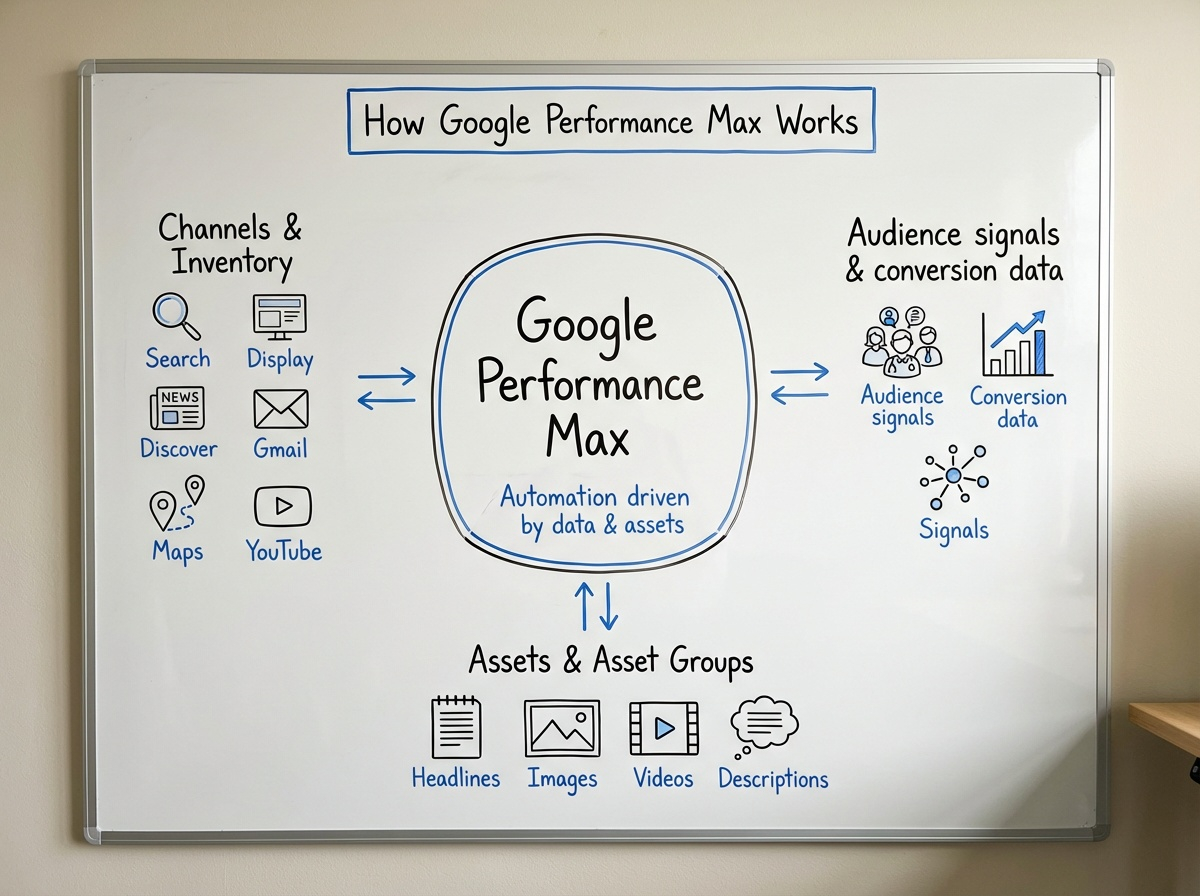
How Does Google Performance Max Work?
Even though Performance Max relies on automation, it’s not a “set it and forget it” campaign type. It heavily relies on how well advertisers provide details and structure, and how clearly the campaign understands what success looks like. What makes Performance Max different from other campaign types is that optimization happens across channels, creatives, and audiences simultaneously, rather than within a single environment like Search or Display.
Inventory and Channels Covered by Performance Max
Performance Max campaigns distribute and optimize ads across almost all Google-owned placements, including:
- Search
- Display
- Discover
- Gmail
- Maps
- YouTube
Since Performance Max dynamically allocates spend based on where it predicts the highest likelihood of conversion, your ads might appear in very different contexts across the user journey. In some cases, they capture demand directly in Search. In others, they influence users earlier through video and visual formats. The system prioritizes performance – it’s about outcome-driven distribution instead of channel management.
For eCommerce businesses, Shopping placements often play a central role within Performance Max, as product-based ads tend to drive the most scalable and conversion-focused results. In well-structured accounts, Shopping inventory typically represents a significant share of spend, while over-distribution toward Display or YouTube placements may prioritize reach over transactional intent. One example of a more controlled setup is launching a Feed-Only Performance Max campaigns, which pull assets directly from the product feed without additional creative assets, focusing spend specifically on Shopping placements.
Aligning campaign structure and assets with this reality helps ensure budget is allocated toward placements most likely to drive revenue, not just visibility.
Assets, Asset Groups, and Creative Assembly
Performance Max doesn’t primarily work with ads – it works with assets. Advertisers provide images, descriptions, headlines, logos, and videos, which are grouped into asset groups. Google then automatically assembles them into ads that fit different placements and formats. The system continuously tests combinations and gives favor to those that perform best.
This doesn’t mean that Performance Max is creating strategy on its own. It amplifies what it’s given. That is why strong, varied assets allow the system to adapt messaging to different users and contexts, but weak or generic assets limit its ability to perform.
Audience Signals and Data Inputs
Audience signals help Performance Max understand where to start learning rather than who exactly to target. Advertisers can include first-party data (customers, site visitors), custom segments, and in-market or affinity audiences. These signals are essential, as they directly shape Performance Max learning and performance by providing context about high-value users and relevant intent patterns early in the learning stage.
In addition to audience signals, Performance Max also uses search themes to guide where ads should appear across the inventory. Search themes are keyword phrases that act as directional inputs, helping the algorithm align ad delivery with relevant queries, particularly during the early stages of optimization. Asset groups missing search themes or audience signals often underperform, limiting the campaign’s ability to efficiently learn and scale toward profitable traffic patterns.
Alongside audience signals, Performance Max relies heavily on data inputs. Conversion data, historical performance, and real-time intent signals all shape how the system learns and optimizes. The more accurate and meaningful the data is, the better Performance Max can perform.
What Performance Max Works Best With
Because Performance Max is built on automation and machine learning, it amplifies what already works best – but also exposes what doesn’t. The campaigns that benefit the most are those with clear signals, structure, and enough data to learn from.
Clear Conversion Goals and Reliable Tracking
Performance Max optimizes around conversion goals. Because of that, those goals have to be clear and aligned, so the system has a reliable definition of success. Campaigns that perform best use primary conversions that genuinely reflect business value, such as purchases or qualified leads, rather than surface-level or low-intent actions like add to cart. Even though secondary conversions are tracked, they are not used for algorithmic optimization.
Since Performance Max bidding is driven by primary conversions actions, incorrectly prioritized or misconfigured conversions can lead the system to optimize for volume instead of quality. In practice, campaigns may appear successful in-platform, while failing to drive meaningful outcomes for the business. That’s why accurate, consistent tracking is essential – to ensure Performance Max optimizes toward results that actually matter. In more advanced setups, having backup conversion tracking available can help reduce risk if primary tracking fails, allowing campaigns to continue learning without major disruption.
Strong Creative and Asset Variety
Since Performance Max assembles ads dynamically across many platforms, creative quality and variety are critical. Campaigns work best when advertisers provide multiple headline and description variations, as well as high-quality images and logos in different formats. Providing video assets is useful as well. The system can learn and adapt within the boundaries it’s given. That’s why tailored messaging to different contexts is important, rather than generic creatives that can cap performance.
Sufficient Budget and Conversion Volume
Campaigns with very limited budgets or low conversion volume often struggle to exit the learning phase or stabilize performance. Budgets should be sufficient to support consistent traffic and conversions. Conversion volume should be high enough for meaningful patterns to be recognized. And performance expectations should account for an initial learning period. Without sufficient volume, results may appear volatile and unpredictable. This is not because the system is failing, but rather that there are not enough signals to optimize effectively.
E-commerce and Lead Gen With a Clear Funnel
Performance Max tends to work best for businesses with relatively clear funnels and defined outcomes. E-commerce with well-structured product feeds and lead generation with clear conversion steps and logic are some of the strongest use cases. When the funnel is clearly structured and measurable, Performance Max can align placements, creatives, and bidding more effectively toward meaningful outcomes. Ambiguous funnels and value propositions make it harder for the system to determine which users and interactions truly matter.
When Performance Max Can Underperform
While Performance Max can be very effective in the right conditions, there are scenarios where it struggles to deliver strong performance. Most issues come from missing inputs or unclear signals. Understanding these limitations is critical before deciding if Performance Max is the right fit for a specific account.
Limited Data or Low Conversion Volume
Google Performance Max relies heavily on conversion data to understand which users, creatives, and placements bring the best results. When conversion volume is too low, the system has limited feedback to optimize against, which often leads to unstable performance or inefficient spend.
This is especially common with new or niche accounts, as well as campaigns with long conversion cycles. In these cases, more controlled campaign types are often better suited to establish baseline performance and generate reliable data before introducing automation.
Weak Offer or Unclear Value Proposition
Automation can’t compensate for a weak offer. If the value proposition isn’t clear or compelling, Performance Max has little to work with. Even when the bidding or targeting are advanced, in these cases, the automation can’t offer the desired value.
Performance Max can still drive traffic when the messaging is vague, pricing is not competitive, or the landing page doesn't clearly communicate why a user should convert. But the traffic might not be as relevant and it might not convert into meaningful results. A strong foundation is always essential – clear positioning, relevant messaging, and conversion paths matched to user intent.
Expecting Control Where There Is None
Performance Max often underperforms when there are misaligned expectations about control. Unlike Search or Shopping campaigns, Performance Max doesn’t allow the same level of visibility and control around placements, queries, and channel-level performance. For advertisers who prefer to have more control and strict brand safety rules, this can be a drawback.
Google Performance Max works best when it’s treated as an outcome-driven system rather than a channel optimization tool. Trying to apply traditional control frameworks often leads to frustration rather than better performance.
Poor Inputs: Weak Assets, Feeds, or Signals
Since targeting, bidding, and delivery are automated, weak creative assets, incomplete product feeds, or unclear conversion tracking significantly limit the system’s ability to learn and optimize. Performance Max is only as effective as the inputs it receives, and without enough signals or variations, it lacks direction and defaults to broad, often inefficient distribution.
How to Think About Performance Max Strategically
A strategic approach starts with understanding the role Performance Max should play within the account. In many cases, it performs best alongside well-structured Search, Shopping, or brand campaigns rather than a standalone solution. Clear separation of responsibilities helps avoid overlap, inefficiencies, and misleading performance signals.
Performance Max should also be treated as a learning system, not a fix or a shortcut. Its results improve over time as it collects signals, tests creatives, and refines delivery. Regular advertiser input improvements are often more impactful than frequent structural changes. Advertisers who focus on inputs and outcomes instead of short-term visibility tend to see more sustainable results.
The Bottom Line: Performance Max as a Strategic Tool
Google Performance Max is a powerful campaign type, but only if expectations are aligned. It’s designed to optimize toward outcomes across channels to increase a business’ visibility and help it reach its goals. But it’s not a tool that offers full control at every step. When used in the right context, it can unlock additional reach and performance that other campaign types may miss.
Performance Max works best for advertisers with clear goals and strong foundations. It rewards structure, data and asset input, clarity, and patience. It often underperforms in accounts that lack direction or rely on automation to fix weak fundamentals. It’s important to ask how Performance Max can benefit the overall growth strategy – not just what channels it runs on. When treated as a strategic layer, Performance Max can be a valuable part of a balanced Google Ads ecosystem.

Ready To Start Scaling Today?
Scaling Your Favorite eCommerce Brands To The Highest Levels Through Google & YouTube Ads.

.svg)
Get Smarter About How To Scale Your Brand...
Discover Insider Knowledge On How We Scale Brands From 7 Figures All The Way Up To 8-9 Figures With Google Ads.
.svg)
.svg)
"The best Google ads agency there is. You only need to look at the quality of clients and the reviews to understand Jackson and his team are the real deal."

"One of the best in the agency space, great service and exceptional results. Since signing on with Jackson he has become one of our greatest assets when scaling."

"Top tier team & service delivery. Jackson is relentless when it comes to fulfilment & client needs. His attention to detail during the onboarding process ensured exponential results for my coaching business. If you're looking to elevate your ad results & learn a tone of new options/skills that can be implemented to drive more sales to your business then I'd strongly recommend Echelonn."

"From the very first conversation with Jackson and his team, it was clear that we had found a Google Ads agency that prioritises results above all else. Their collaboration between data-driven experts and a skilled copywriter creates a dynamic duo for Google advertising success..."

"Been working with them for 9 months and it's been a great experience. Jackson and his team know what they are doing and always goes above and beyond. If you're looking for a reliable Google ads agency this is the one."

"The best Google ads agency there is. You only need to look at the quality of clients and the reviews to understand Jackson and his team are the real deal."
"One of the best in the agency space, great service and exceptional results. Since signing on with Jackson he has become one of our greatest assets when scaling."
"Top tier team & service delivery. Jackson is relentless when it comes to fulfilment & client needs. His attention to detail during the onboarding process ensured exponential results for my coaching business. If you're looking to elevate your ad results & learn a tone of new options/skills that can be implemented to drive more sales to your business then I'd strongly recommend Echelonn."
"From the very first conversation with Jackson and his team, it was clear that we had found a Google Ads agency that prioritises results above all else. Their collaboration between data-driven experts and a skilled copywriter creates a dynamic duo for Google advertising success..."
"Been working with them for 9 months and it's been a great experience. Jackson and his team know what they are doing and always goes above and beyond. If you're looking for a reliable Google ads agency this is the one."
More Articles Like This.
Find answers to common queries about our services and how we can help you.
.svg)
Google Ads Optimization Score: Should You Trust It?
What Is a Good CTR for Google Ads?
Why More Google Ads Spend Doesn't Always Mean More Revenue
How To Rank Your Google Shopping Ads Multiple Times
Why Your Google Ads Scale Breaks After $X Per Day
How to Tell if Your Google Ads Agency Is Underperforming
Why Your Performance Max Campaign Gets Clicks but No Sales
.png)
Why Your Google Ads Budget Isn't Spending (And How to Fix It)

The Right Way to Run Google Dynamic Search Ads
How to Get New Customers With Google Ads in 2026
Why Your Google Ads CPA Keeps Increasing and How to Reduce It
What Is a Good ROAS for eCommerce Businesses?
How to Set Up Google Ads Conversion Tracking the Right Way
How Much Does a Google Ads Agency Cost?
Why Your Google Ads Are Not Converting
.png)
Average CPC in Google Ads by Industry (And What It Means for Your Strategy)
Performance Max vs. Shopping Campaigns: Which One is Better?

Why Your Google Shopping Ads Get Impressions But No Clicks (Image Optimization Guide)
Why Your Google Ads Are Not Showing

YouTube Ads Targeting Framework That's Driven $10M+ for eCommerce Brands

What Professional Google Shopping Ads Management Looks Like
How Much Do Google Ads Cost in 2026?

Should Your Business Use Google Search Ads or Performance Max?

Performance Max Best Practices for Sustainable Growth
.png)
Google Shopping Ads Audience Targeting: What Actually Impacts Performance
.png)
How to Write Google Search Ads That Actually Convert
.png)
6 Google Shopping Feed Best Practices That Drive Better ROAS
%20(1).png)
How to Get Your Products Recommended by AI (ChatGPT, Google AI & More)
.png)
Common Google Ads Myths That Cost Businesses Money
.png)
7 Benefits of Google Shopping Ads for Your eCommerce Business
.png)
How to Switch Google Ads Agency Without Losing Performance or Data
.png)
Demand Capture vs Demand Generation: Where Google Ads Fits
.png)
How to Prepare Your Business for Working With a Google Ads Agency

How to Avoid Wasting Budget on the Wrong Searches With Google Ads Keyword Match Types
Google Ads Account Ownership: What Businesses Should Know Before Hiring an Agency
.png)
Landing Page Optimization Strategies That Increase Conversions
SEO and Google Ads: How Search Engine Optimization and Paid Search Work Together
Types of Remarketing in Google Ads: How Each One Works and When to Use It
Google Ads Keyword Research: How to Find Keywords That Actually Convert
What Is Google Performance Max and How Does It Work?
.png)
How Advertorials Support High-Intent Google Ads Funnels
%20(Canva%20Template).png)
How Audience Targeting Works in Google Search Ads (and When to Use It)

Google Ads for New Brands: What to Know Before Spending Your First Dollar
.png)
What Is a PPC Agency – and When It Makes Sense to Hire One
.png)
How to Improve Your Google Ads Conversion Rate

.png)
The Right Way to Link Shopify and Google Ads for Scalable Growth
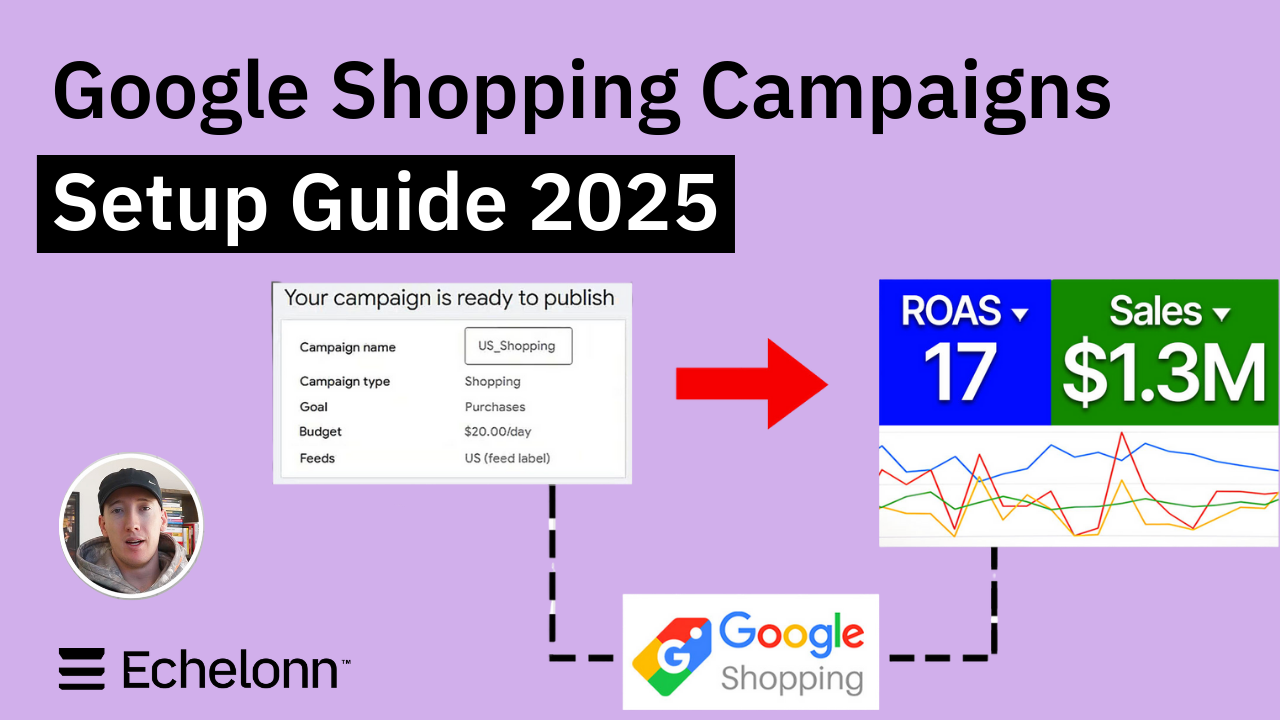
Google Shopping Campaigns Setup Guide 2025
Confessions of a Google Ads Auditor: The Worst Mistakes We See Inside eCom Accounts

How to Spy on Competitor Google Ads: Complete 2025 Guide
%20(2).png)
7 Questions to Ask Before Hiring a Google Ads Consultant
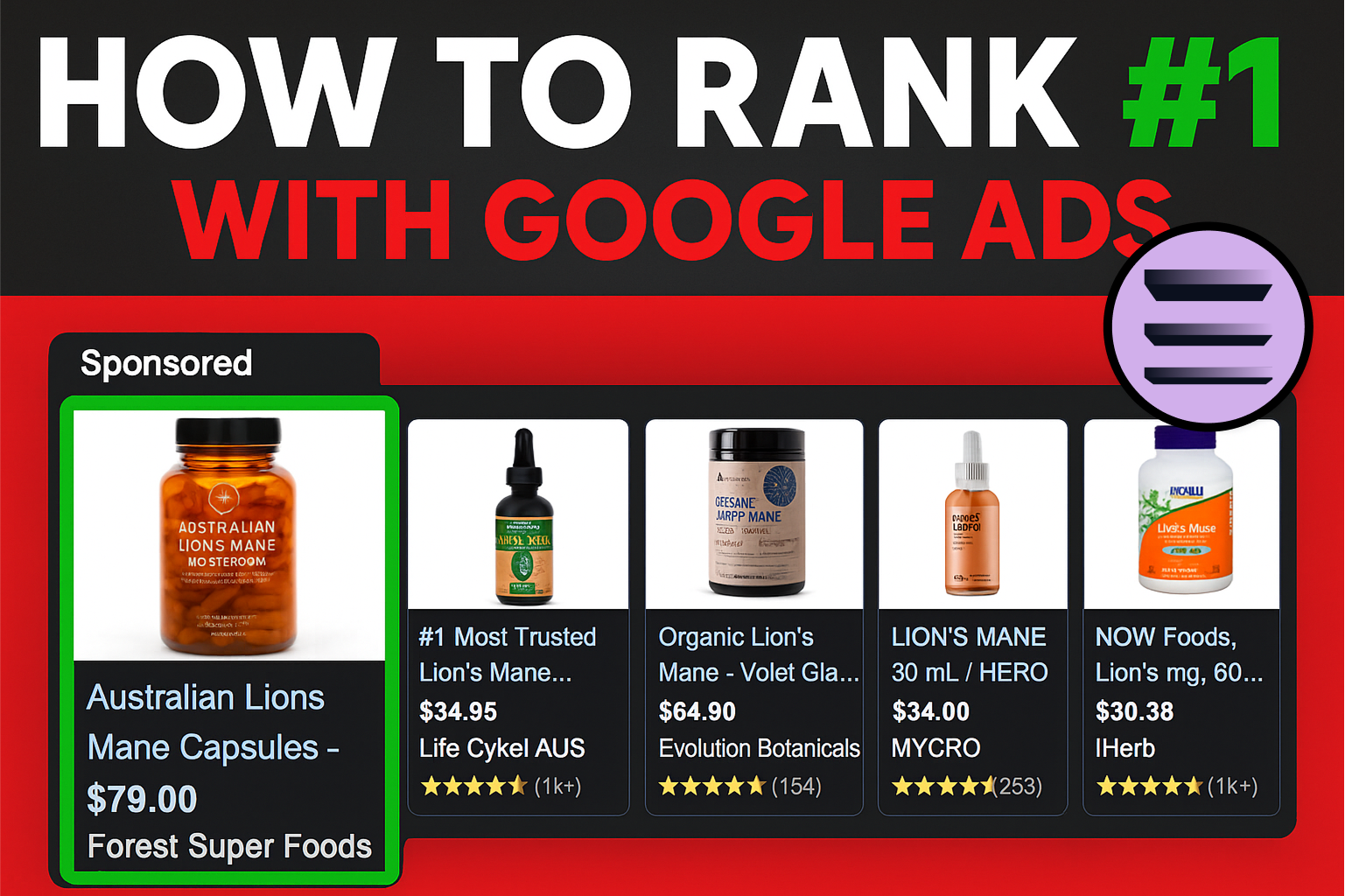
How to Rank #1 on Google Ads: Complete Shopping & Search Guide 2025
.png)
Learning Google Ads in 2025: The Roadmap Nobody Talks About
%20(1).png)
What Makes a Google Ads Specialist Worth $10,000/Month?

Why Cheap Google Ads Consulting Costs You $180,000+ in Lost Revenue
.png)
Why 99% of Google Ads Experts Fail (& How to Find One That Won’t)
.png)
5 Google Product Feed Fixes for eCom Growth
.png)
Google Ads Campaign Structure: Why 95% of Brands Waste Budget on Mixed Traffic

In-House vs Agency Google Ads: Which Delivers Better ROI in 2025?
.png)
How to Scale Google Ads With a Small Budget | Setup and Optimization

Google Shopping Optimization: 11 Proven Tactics for Maximum ROAS
%20(3).png)
eCom Growth Strategy: How We Scaled a Supplement Brand From $1.9M to $8.6M With Google Ads
%20(4).png)
Google Merchant Center Fix: How to Improve Rankings With Accurate Shipping Times

CTR Is Misunderstood by 95% of the PPC Industry (What to Optimise for Instead)
.png)
Google Ads AI | Manual vs Automated Campaign Performance

Complete YouTube Ads Guide 2025 | 3 Formats, 5 Principles, Proven Results
%20(2).png)
eCom Growth Strategy With Google Ads in 2025
.png)
Google Marketing Live 2025: 11 Key Takeaways for Marketers
%20(1).png)
YouTube Advertising Strategy: How to Drive Results Across Every Format
Google Shopping Feed Optimisation: Tips for Better Results

How Long Does it Take for Google Ads to Work?

Search Ad Strategies to Maximize Sales with Google ads for eCommerce (2024)

2025 Google Shopping Ads: Ultimate Guide, Benchmarks, and Pricing Breakdown

Maximizing ROI with Advanced Google Shopping Bid Strategies and Automated Bidding