
.svg)
How Advertorials Support High-Intent Google Ads Funnels


.png)
Google Ads funnels are often treated as a straightforward setup – a user searches, clicks an ad, lands on a page, and converts. In theory, this makes sense. But in practice, many funnels underperform because intent alone is not always enough to drive action.
Many users who actively search for a solution don’t convert immediately. They compare options, evaluate credibility, and look for the best fit before making a decision. Advertorials play an important role in bridging this gap. This article explains what a high-intent Google Ads funnel looks like, where advertorials fit within it, and when they help performance – as well as when they don’t add value.
What Does a High-Intent Google Ads Funnel Look Like?
A high-intent Google Ads funnel is built around users who are actively searching for a solution. They already recognize their need and are evaluating available options rather than discovering the problem for the first time.
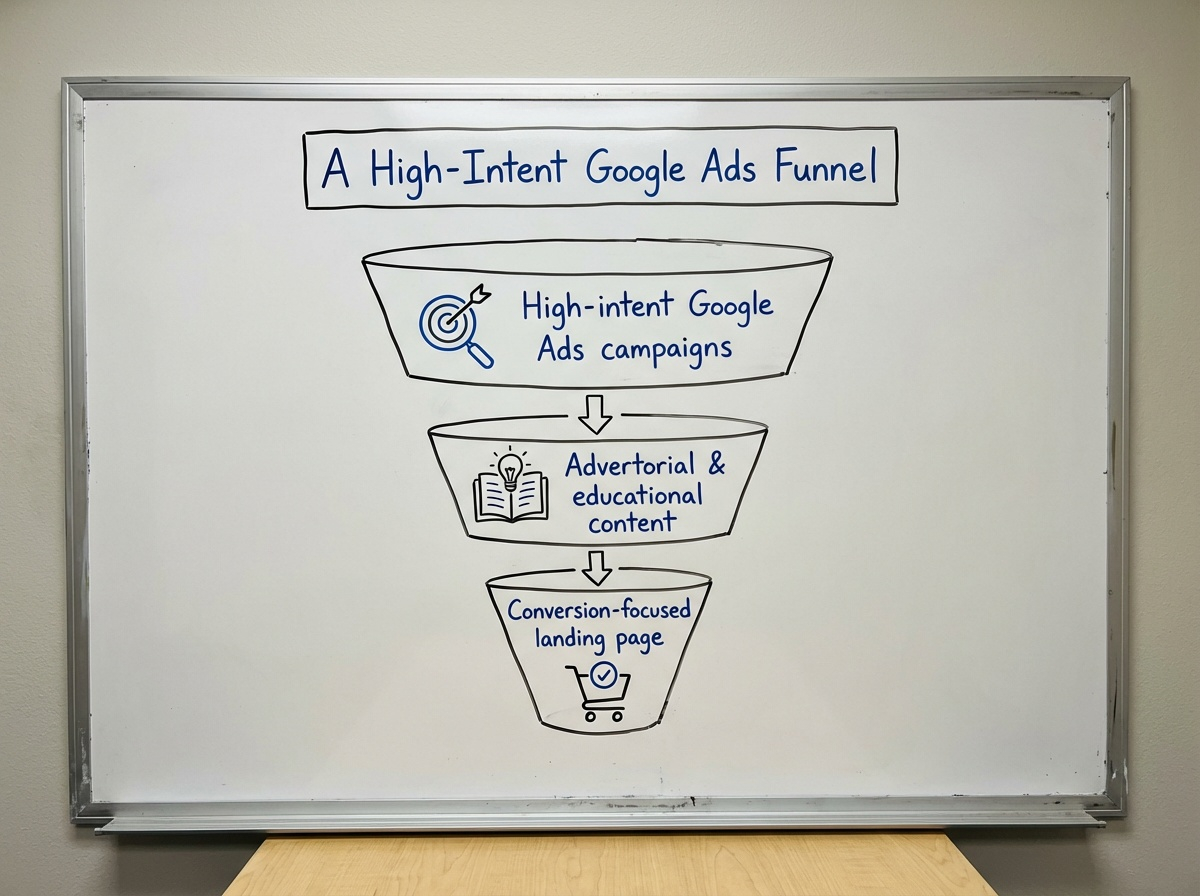
At the top of the funnel, there are typically campaigns targeting non-branded keywords with clear commercial or transactional intent. These searches signal a strong readiness to act, but not necessarily an immediate readiness to convert. Even with high intent, users are often still comparing options and evaluating credibility.
This is where high-intent funnels differ from simple “search → landing page → conversion” setups. In practice, many users need an intermediate step that helps them validate their decision. Rather than pushing directly for conversion, this step guides users through a layer that answers their questions and builds trust.
In practice, the optimal path depends on the type of intent and channel. For highly transactional queries (for example, “buy [product]”), sending users directly to a conversion-focused product or collection page is often the most efficient approach.
However, for broader research-driven searches or visual channels like YouTube, users typically need an intermediate step, such as an advertorial, sales page with video, or educational content, before they are ready to convert.
The middle of the funnel often includes this intermediate layer, such as an advertorial or educational content. The bottom of the funnel typically consists of a conversion-focused landing page. When each element of the funnel is intentionally designed and aligned, the funnel becomes efficient and scalable.
What Is an Advertorial in a Google Ads Funnel?
In the context of a Google Ads funnel, an advertorial acts as an intermediate step in the middle of the funnel. It’s a content-driven page designed to educate, frame the offer, and reduce uncertainty before asking for a conversion, positioning the product as the natural solution to the user's problem.
Advertorials are commonly created in an editorial-style format. They resemble blog posts, reviews, or educational articles and are usually well structured and SEO optimized. This makes them more engaging than obvious ads and less intrusive, especially for users who are still evaluating their options. By expanding how and where users interact with a brand, advertorials help increase visibility, build authority, and support higher conversion rates through education and trust-building.
Users may land on an advertorial from Search, YouTube, Display, or remarketing campaigns, depending on the funnel structure. Advertorials are particularly effective on channels where users are still in a discovery mindset, such as YouTube, where additional context or educational elements can help build trust before moving toward conversion. For these campaigns, pages with video elements can be particularly effective in supporting trust and understanding.
Regardless of the entry point, the goals remain the same – to support informed decision-making before conversion, to match the landing page tone to the user’s intent, and to provide context for those who need it, without slowing down those ready to buy. Advertorials are particularly effective when the offer requires explanation, comparison, or proof. When used strategically, they can become a strong part of the Google Ads funnel.
Advertorial pages allow eCommerce brands to target informational search queries that would normally be difficult to monetize with traditional product or category pages.
The video below breaks down how this strategy works in practice and explains why informational keywords can often generate significantly cheaper traffic in Google Ads.
Where Advertorials Fit in a High-Intent Google Ads Funnel and How They Support It
Advertorials play a strategic role in high-intent Google Ads funnels by acting as a bridge between intent and conversion. They help address hesitation and build confidence at a point where users are close to taking action but not fully convinced yet.
Bridging the Gap Between Intent and Trust
Even when users search with high intent, they might need one final reassurance to make a decision. That’s where advertorials come in – they close the gap by providing context, validation, and explanation in a format that feels informative rather than promotional.
By answering common questions and clarifying positioning, advertorials help users confirm that they’re making the right choice. High-intent doesn’t automatically equal high trust, and users often need additional information before committing. This is especially important for newer brands, unfamiliar offers, or competitive markets where credibility plays a decisive role.
Pre-Selling Before the Conversion Step
One of the biggest strengths of advertorials is their ability to pre-sell the offer. They introduce the value proposition gradually and guide users to the final step – conversion – once they’re properly informed.
This significantly reduces friction on the final landing page. Users arrive with clearer expectations, stronger intent, and a better understanding of why the offer is relevant to them. This way, the landing page can focus solely on a clear and simple selling setup rather than heavy explanation, which often leads to higher conversion rates and more efficient ad spend.
Improving Funnel Efficiency
Advertorials also improve overall funnel efficiency by qualifying and warming traffic. Users who engage with advertorial content and move forward are typically more motivated to take the final step. As a result, advertisers benefit from higher conversion rates, stronger engagement, and improved cost efficiency.
From a Google Ads perspective, this structure supports better optimization. More engaged users send stronger engagement and conversion signals across the funnel, which helps bidding strategies and performance algorithms prioritize higher-quality traffic.
When Advertorials Work Best (and When They Don’t)
Even though advertorials in Google Ads funnels offer many benefits, they are not a universal solution for every funnel. Their effectiveness depends on user intent and how much context is needed before conversion. When used in the right situations, advertorials strengthen funnel performance. When used unnecessarily, they can slow it down.
Funnels With Longer or More Complex Decision Cycles
Advertorials work best in funnels where users need time to evaluate their options. This typically includes products or services with higher prices, longer commitment periods, or more complex value propositions.
In these cases, users rarely convert after a single interaction. Advertorials support the decision-making process by providing the information and reassurance users need to understand which solution truly fits their needs. This is particularly common in B2B funnels, high-consideration products, and services where trust and clarity play a critical role.
Competitive Search Campaigns With Expensive Clicks
In highly competitive Google Ads environments, clicks are often expensive and margins for error are small. Sending high-quality traffic directly to a conversion-focused landing page can work, but it also increases the risk of wasted spend on users who aren’t fully convinced yet.
Advertorials help improve efficiency in these cases by making better use of each click. By warming users up and addressing their objections upfront, they increase the likelihood that traffic reaching the conversion step is ready to act. As a result, performance becomes stronger and more stable, especially in accounts where budgets are limited and every click needs to count.
When Advertorials Don’t Add Value
Advertorials are not always necessary. For simple offers, strong brand recognition, or clear brand-driven intent, adding an extra step to the funnel can cause unnecessary friction.
Google Ads funnels built around branded search, impulsive purchases, or very straightforward value propositions often perform better when the middle step is skipped. In these cases, users need a direct path to conversion. Advertorials also tend to underperform when treated as generic content rather than a strategic funnel component. If they lack clear messaging aligned with the rest of the funnel, or if they don’t have a clearly defined role, they can dilute intent instead of strengthening it.
The Bottom Line: Using Advertorials as a Strategic Funnel Layer
Advertorials support high-intent Google Ads funnels when they’re used intentionally. They bridge the gap between intent and conversion by building trust, providing clarity, and preparing users to take action.
High-performing funnels recognize that even users with strong intent often need more time and information before converting. Advertorials provide reassurance and context to users actively searching for a solution. When aligned with the buying journey, they improve funnel efficiency and support more sustainable performance.
The key is to understand when additional context adds value – and when it only adds friction. Advertorials work best when they address a real problem, not when they are added to the funnel by default. When the funnel structure and messaging are aligned, advertorials become a powerful tool for guiding high-quality traffic toward meaningful conversions without forcing the decision too early.

Ready To Start Scaling Today?
Scaling Your Favorite eCommerce Brands To The Highest Levels Through Google & YouTube Ads.

.svg)
Get Smarter About How To Scale Your Brand...
Discover Insider Knowledge On How We Scale Brands From 7 Figures All The Way Up To 8-9 Figures With Google Ads.
.svg)
.svg)
"The best Google ads agency there is. You only need to look at the quality of clients and the reviews to understand Jackson and his team are the real deal."

"One of the best in the agency space, great service and exceptional results. Since signing on with Jackson he has become one of our greatest assets when scaling."

"Top tier team & service delivery. Jackson is relentless when it comes to fulfilment & client needs. His attention to detail during the onboarding process ensured exponential results for my coaching business. If you're looking to elevate your ad results & learn a tone of new options/skills that can be implemented to drive more sales to your business then I'd strongly recommend Echelonn."

"From the very first conversation with Jackson and his team, it was clear that we had found a Google Ads agency that prioritises results above all else. Their collaboration between data-driven experts and a skilled copywriter creates a dynamic duo for Google advertising success..."

"Been working with them for 9 months and it's been a great experience. Jackson and his team know what they are doing and always goes above and beyond. If you're looking for a reliable Google ads agency this is the one."

"The best Google ads agency there is. You only need to look at the quality of clients and the reviews to understand Jackson and his team are the real deal."
"One of the best in the agency space, great service and exceptional results. Since signing on with Jackson he has become one of our greatest assets when scaling."
"Top tier team & service delivery. Jackson is relentless when it comes to fulfilment & client needs. His attention to detail during the onboarding process ensured exponential results for my coaching business. If you're looking to elevate your ad results & learn a tone of new options/skills that can be implemented to drive more sales to your business then I'd strongly recommend Echelonn."
"From the very first conversation with Jackson and his team, it was clear that we had found a Google Ads agency that prioritises results above all else. Their collaboration between data-driven experts and a skilled copywriter creates a dynamic duo for Google advertising success..."
"Been working with them for 9 months and it's been a great experience. Jackson and his team know what they are doing and always goes above and beyond. If you're looking for a reliable Google ads agency this is the one."
More Articles Like This.
Find answers to common queries about our services and how we can help you.
.svg)
How To Rank Your Google Shopping Ads Multiple Times
Why Your Google Ads Scale Breaks After $X Per Day
How to Tell if Your Google Ads Agency Is Underperforming
Why Your Performance Max Campaign Gets Clicks but No Sales
.png)
Why Your Google Ads Budget Isn't Spending (And How to Fix It)

The Right Way to Run Google Dynamic Search Ads
How to Get New Customers With Google Ads in 2026
Why Your Google Ads CPA Keeps Increasing and How to Reduce It
What Is a Good ROAS for eCommerce Businesses?
How to Set Up Google Ads Conversion Tracking the Right Way
How Much Does a Google Ads Agency Cost?
Why Your Google Ads Are Not Converting
.png)
Average CPC in Google Ads by Industry (And What It Means for Your Strategy)
Performance Max vs. Shopping Campaigns: Which One is Better?

Why Your Google Shopping Ads Get Impressions But No Clicks (Image Optimization Guide)
Why Your Google Ads Are Not Showing

YouTube Ads Targeting Framework That's Driven $10M+ for eCommerce Brands

What Professional Google Shopping Ads Management Looks Like
How Much Do Google Ads Cost in 2026?

Should Your Business Use Google Search Ads or Performance Max?

Performance Max Best Practices for Sustainable Growth
.png)
Google Shopping Ads Audience Targeting: What Actually Impacts Performance
.png)
How to Write Google Search Ads That Actually Convert
.png)
6 Google Shopping Feed Best Practices That Drive Better ROAS
%20(1).png)
How to Get Your Products Recommended by AI (ChatGPT, Google AI & More)
.png)
Common Google Ads Myths That Cost Businesses Money
.png)
7 Benefits of Google Shopping Ads for Your eCommerce Business
.png)
How to Switch Google Ads Agency Without Losing Performance or Data
.png)
Demand Capture vs Demand Generation: Where Google Ads Fits
.png)
How to Prepare Your Business for Working With a Google Ads Agency

How to Avoid Wasting Budget on the Wrong Searches With Google Ads Keyword Match Types
Google Ads Account Ownership: What Businesses Should Know Before Hiring an Agency
.png)
Landing Page Optimization Strategies That Increase Conversions
SEO and Google Ads: How Search Engine Optimization and Paid Search Work Together
Types of Remarketing in Google Ads: How Each One Works and When to Use It
Google Ads Keyword Research: How to Find Keywords That Actually Convert
.png)
What Is Google Performance Max and How Does It Work?
How Advertorials Support High-Intent Google Ads Funnels
%20(Canva%20Template).png)
How Audience Targeting Works in Google Search Ads (and When to Use It)

Google Ads for New Brands: What to Know Before Spending Your First Dollar
.png)
What Is a PPC Agency – and When It Makes Sense to Hire One
.png)
How to Improve Your Google Ads Conversion Rate

.png)
The Right Way to Link Shopify and Google Ads for Scalable Growth
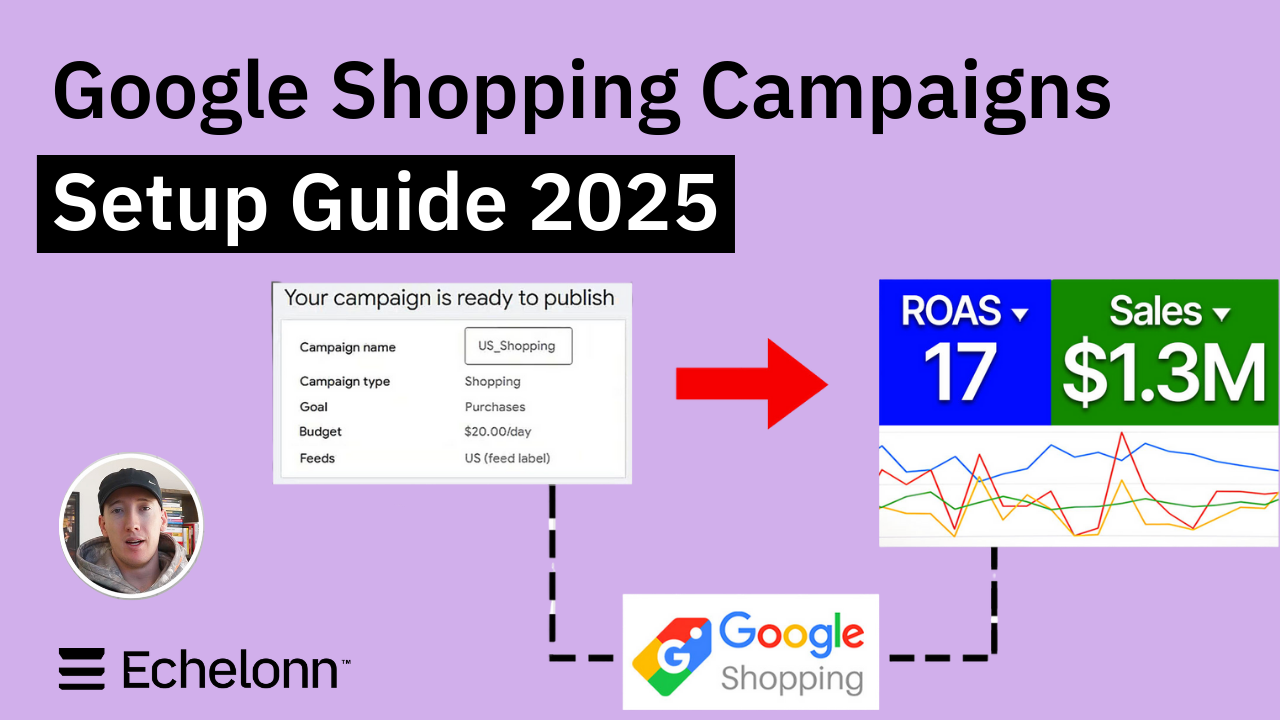
Google Shopping Campaigns Setup Guide 2025
Confessions of a Google Ads Auditor: The Worst Mistakes We See Inside eCom Accounts

How to Spy on Competitor Google Ads: Complete 2025 Guide
%20(2).png)
7 Questions to Ask Before Hiring a Google Ads Consultant
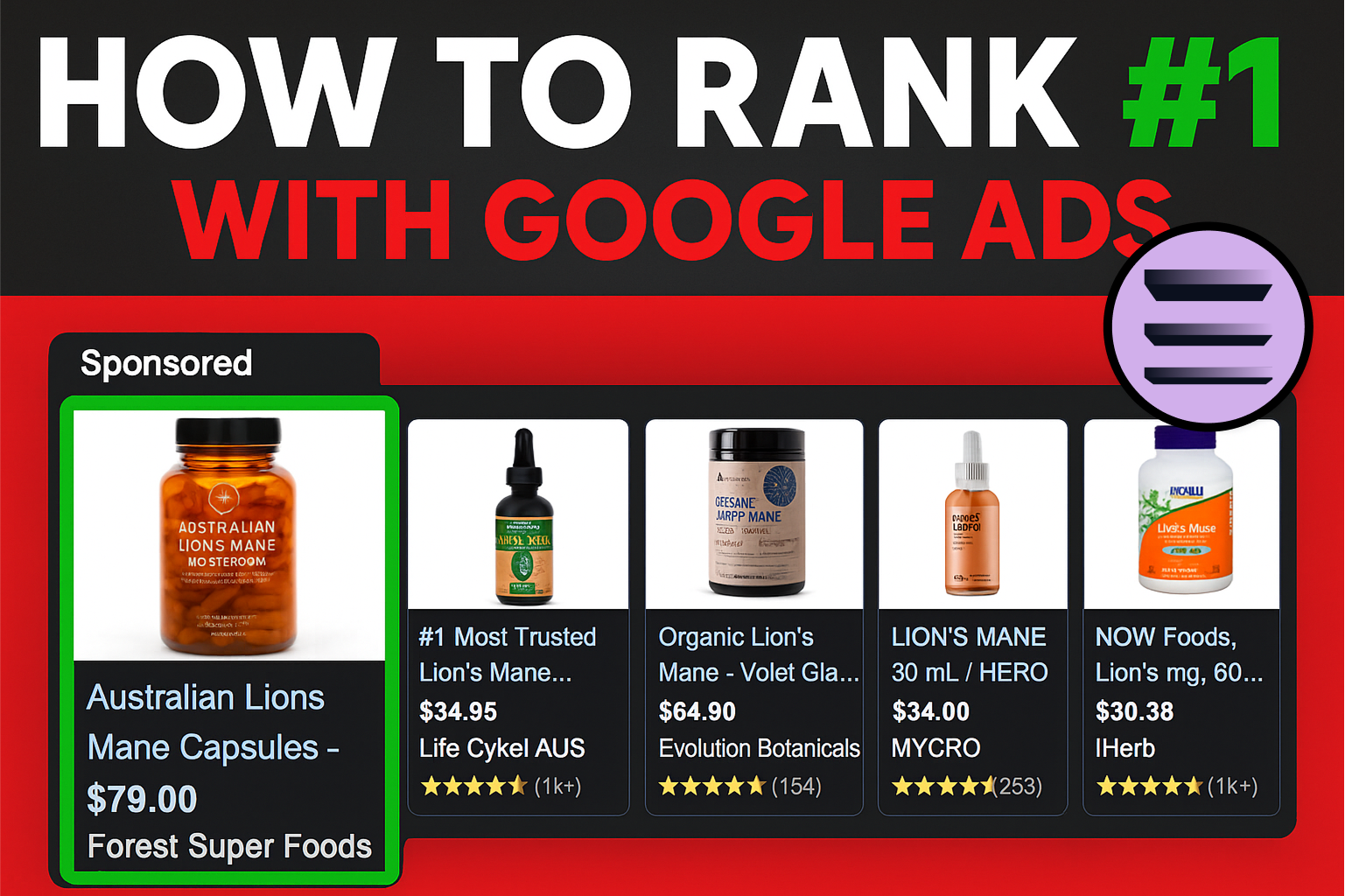
How to Rank #1 on Google Ads: Complete Shopping & Search Guide 2025
.png)
Learning Google Ads in 2025: The Roadmap Nobody Talks About
%20(1).png)
What Makes a Google Ads Specialist Worth $10,000/Month?

Why Cheap Google Ads Consulting Costs You $180,000+ in Lost Revenue
.png)
Why 99% of Google Ads Experts Fail (& How to Find One That Won’t)
.png)
5 Google Product Feed Fixes for eCom Growth
.png)
Google Ads Campaign Structure: Why 95% of Brands Waste Budget on Mixed Traffic

In-House vs Agency Google Ads: Which Delivers Better ROI in 2025?
.png)
How to Scale Google Ads With a Small Budget | Setup and Optimization

Google Shopping Optimization: 11 Proven Tactics for Maximum ROAS
%20(3).png)
eCom Growth Strategy: How We Scaled a Supplement Brand From $1.9M to $8.6M With Google Ads
%20(4).png)
Google Merchant Center Fix: How to Improve Rankings With Accurate Shipping Times

CTR Is Misunderstood by 95% of the PPC Industry (What to Optimise for Instead)
.png)
Google Ads AI | Manual vs Automated Campaign Performance

Complete YouTube Ads Guide 2025 | 3 Formats, 5 Principles, Proven Results
%20(2).png)
eCom Growth Strategy With Google Ads in 2025
.png)
Google Marketing Live 2025: 11 Key Takeaways for Marketers
%20(1).png)
YouTube Advertising Strategy: How to Drive Results Across Every Format
Google Shopping Feed Optimisation: Tips for Better Results

How Long Does it Take for Google Ads to Work?

YouTube Ads Analytics 101: Key Metrics and How to Use Them

Search Ad Strategies to Maximize Sales with Google ads for eCommerce (2024)

2025 Google Shopping Ads: Ultimate Guide, Benchmarks, and Pricing Breakdown

Maximizing ROI with Advanced Google Shopping Bid Strategies and Automated Bidding