
.svg)
Google Ads Keyword Research: How to Find Keywords That Actually Convert


Google Ads keyword research is often treated as a technical task – open a tool, sort keywords by volume, check CPC, and build a list. In reality, this approach is one of the most common reasons why Search campaigns fail to scale profitably.
Keywords don’t just determine what you pay per click. They define who you attract, where users are in their decision journey, and how likely they are to convert. A campaign with lower CPC but weak intent can easily underperform compared to one built on fewer, more expensive keywords with stronger buying signals. In this article, you’ll learn what high-intent keywords mean in Google Ads, why search volume is often a misleading metric, and how to do keyword research for scalable results.
What High-Intent Keywords Mean in Google Ads
High-intent keywords in Google Ads are terms that signal a user is close to taking action. These users are not browsing out of curiosity or gathering general information. They’re actively evaluating products, solutions, providers, and offers. High-intent keywords often include words or phrases related to pricing, comparisons, alternatives, solutions, or specific product or service terms.
The exact wording can vary, but what matters most is the underlying intent. Two keywords with similar search volume can behave very differently depending on what the user is trying to achieve.
Understanding this is essential, because Search campaigns are built around demand capture – you’re not creating demand, but trying to capture it at the right moment. Keyword research helps you decide which terms to target to achieve this.
While keyword research is most relevant in Search campaigns, its insights extend beyond Search. How users phrase their problems and solutions can inform messaging, audience signals, and creative decisions across other Google Ads campaign types as well.
High-Intent Keywords vs. High-Volume Keywords
Keyword research in SEO often prioritizes search volume. However, in Google Ads, this approach can be misleading. Even though high-volume keywords promise reach and traffic, volume itself doesn’t indicate readiness to convert. Many high-volume searches reflect early stages of the decision journey, where users are still exploring options.
High-intent keywords usually have lower search volume – but they carry much stronger commercial signals. These terms usually come from users who are actively searching for a solution to their problem. As a result, they typically convert better, even if their CPC might be higher. Prioritizing high-intent keywords often leads to better and more predictable performance outcomes, especially for bottom-of-funnel campaigns focused on immediate results.
At the same time, focusing exclusively on high-intent keywords can create a competitive “Red Ocean", where many advertisers bid on the same limited set of terms. This leaves an opportunity to complement bottom-of-funnel targeting with higher-volume, lower-competition keywords earlier in the user journey. Informational or problem-aware searches, such as “benefits of collagen” or “how to improve gut health” often come with significantly lower CPCs (sometimes a fraction of bottom-of-funnel terms) and, when paired with the right landing page and strategy, can contribute to profitable conversions at much lower cost.
Search Intent vs. Commercial Intent
Being able to recognize and separate keywords that reflect search versus commercial intent is essential for effective Google Ads keyword research. Users in the early stages of their decision journey are often learning and researching without an immediate intent to buy.
When search suggests evaluation or decision-making, we start talking about commercial intent. These queries imply that the user is already considering options and may convert if the right offer appears at the right time. Distinguishing between general search intent and commercial intent is what separates campaigns that drive traffic from campaigns that drive revenue.
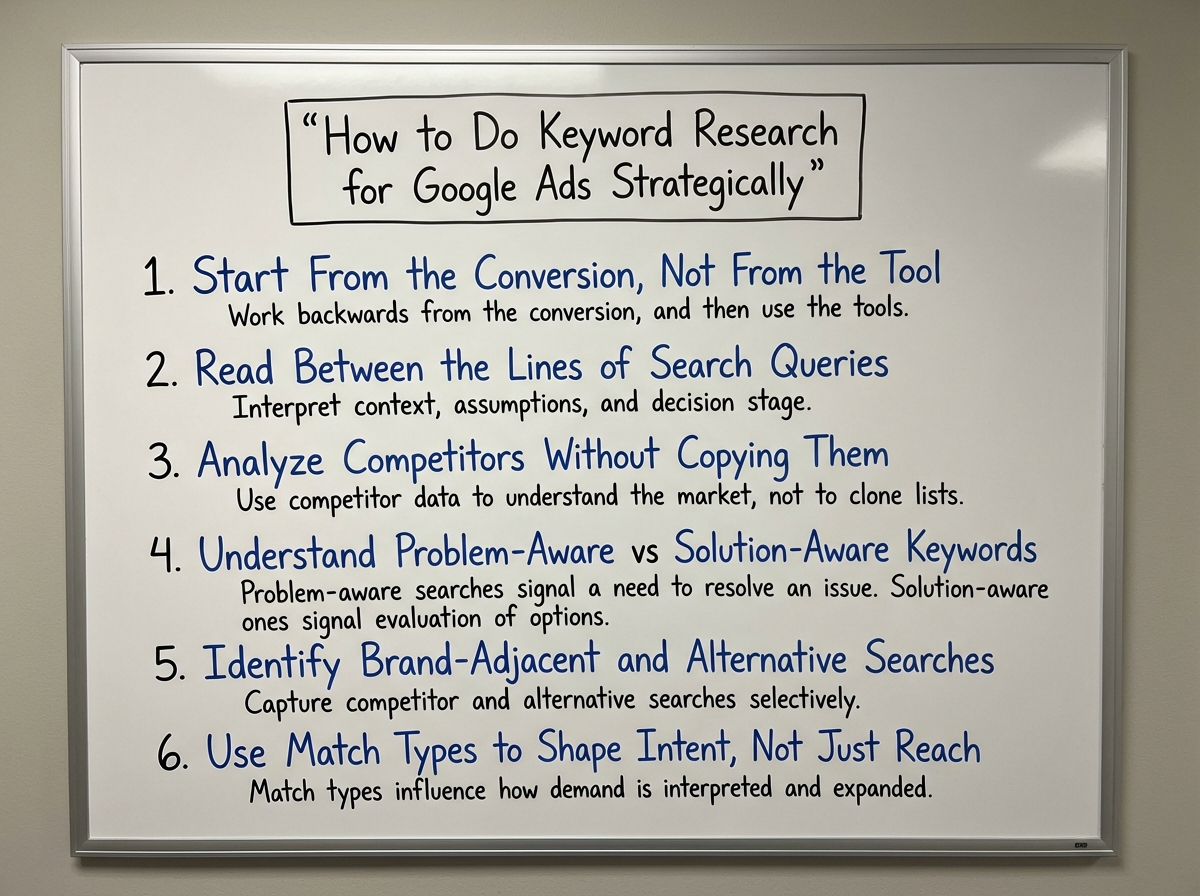
How to Do Keyword Research for Google Ads Strategically
Strategic keyword research in Google Ads depends less on the tools you use and more on how you frame the problem you’re trying to solve. Instead of asking “What keywords should we target?”, try to ask “What problem is the user trying to solve at this point of their decision process?”.
Tools and data are absolutely necessary – but they don’t replace judgment, experience, or business context. Without that context, keyword research often turns into list-building rather than decision-making.
Start From the Conversion, Not From the Tool
Most keyword research workflows begin inside Google Keyword Planner or a third-party tool. From a paid search strategy perspective, that’s often already one step too late. A more reliable starting point should be the conversion itself.
When you work backwards from the conversion, keywords stop being isolated search terms and start becoming signals of readiness within a search context. The goal is to identify queries that align with a realistic decision moment rather than to find and target all the possible keywords.
This mindset should also inform how campaigns are structured. Grouping keywords around winning landing pages helps maintain alignment between search intent, ad messaging, and on-page experience. This often leads to smaller, more focused keywords lists – but that’s not a drawback. It usually indicates that the research is intentional and aligned with how buying decisions actually happen. It also tends to improve relevance, Quality Score, and overall performance.
Read Between the Lines of Search Queries
Search queries rarely describe intent explicitly. Users reduce complex decisions into a few words, and those need to be interpreted in context rather than in isolation. For example, two keywords might look similar on the surface but point towards very different stages of awareness. A query like “running shoes” often reflects general category exploration, while “Nike Zoom Fly 6 men’s size 9” suggests an active comparison and a much higher likelihood of conversion.
To read between the lines of search queries means to ask the right questions. Analyze what assumptions the user has, what alternatives they are likely considering, and what outcome they are trying to achieve. The answers matter more than volume or suggested CPC, and they determine whether a click is exploratory or transactional.
Analyze Competitors Without Copying Them
Competitor analysis can be useful, but it has to be approached carefully. Seeing which keywords competitors bid on can highlight patterns and gaps, but it shouldn’t be a shortcut to decision-making. Copying competitors’ keywords list can often lead to misaligned traffic or inflated costs without clear value.
Instead, competitor analysis should be used to understand which parts of the funnel competitors are actively bidding for, where they rely on broad category terms versus more specific, high-intent queries, and which searches appear to be core to the market.
Understand Problem-Aware vs Solution-Aware Keywords
A critical distinction in Google Ads keyword research is whether a user is problem-aware or solution-aware. Both are high-intent – but they serve different roles in the decision process. Problem-aware searches signal urgency to resolve an issue, but they still leave room for education and positioning. Solution-aware keywords indicate that the user has already defined the problem and is now actively evaluating specific solutions, providers, or approaches.
Both can convert, but they tend to behave differently. Problem-aware searches often require stronger message alignment and clearer value articulation to move the user forward. Solution-aware queries typically convert faster, but they’re often more competitive and come with higher costs. Understanding where your keywords are on the spectrum helps set realistic expectations around targeting, messaging, and performance across the funnel.
In some strategies, advertisers choose to extend keyword coverage further up the funnel by targeting informational queries. These target users at the earliest stage of awareness, before they’ve fully defined their problem or begun evaluating solutions. They tend to have higher search volume, lower competition from other advertisers, and significantly lower CPCs. Informational keywords require a different messaging and landing page approach, as intent is still being formed rather than acted on. When executed properly, campaigns with informational keywords can support profitable conversions while building trust with users earlier in their buying journey.
Identify Brand-Adjacent and Alternative Searches
High-intent demand exists around your own brand. Brand-adjacent and alternative searches also often represent users who are already deep in the decision process, but still open to switching. These queries often include competitor names or well-known solutions. When handled carefully, they can be efficient to capture demand without relying solely on generic category keywords.
However, they are also quite restrictive. Not every alternative search is worth pursuing, and not every brand-adjacent keyword aligns with your positioning. Strategic keyword research evaluates these opportunities based on fit, intent, and potential business impact.
Use Match Types to Shape Intent, Not Just Reach
Match types are often discussed in terms of control and reach. However, they’re more useful when viewed as a way to shape how search intent is interpreted and expanded. The important question is how much ambiguity you’re willing to introduce into your demand capture.
Broad match can be effective when paired with Smart Bidding strategies and sufficient performance history – specifically in accounts with a high number of conversions. In these scenarios, Google’s machine learning has enough data to guide expansion effectively. However, broad match tends to expand the intent you feed into the system, which often leads to automation scaling into vagueness when conversion data is limited.
Exact and phrase match offer more predictability, especially in accounts where clarity matters more than volume or when testing new keyword themes. For brand campaigns specifically, broad match is generally best avoided, as it allows Google to show ads for irrelevant variations and competitor searches, wasting budget on low-intent traffic. Since brand searchers already have high purchase intent, exact or phrase match captures this valuable traffic more efficiently while eliminating irrelevant spend and reducing CPCs.
The choice of match type should reflect how well-defined your demand already is and whether you have sufficient conversion volume to support automation. Match types magnify the strengths and weaknesses of a keyword strategy, rather than fixing a weak one.
Keyword research becomes much easier when you see how the process works step by step inside the Google Ads interface.
The video below walks through a practical keyword research workflow, including how to identify high-intent search terms, organize keyword themes, and structure campaigns more strategically.
"More keywords don’t create more performance. Understanding user intent does."
The Bottom Line: Keyword Research as a Strategic Advantage
Treating keyword research in Google Ads like a checklist task is a common mistake. In reality, it’s a strategic decision that shapes who enters your funnel and under what conditions.
High-performing Search campaigns are rarely built on extensive keyword lists. What’s more important is a clear understanding of intent, context, and business goals. As automation continues to play a larger role in campaign execution, the ability to interpret intent and align it with meaningful business outcomes becomes more important than ever. When keyword research is treated as a strategic input, it can become a strong competitive advantage.

Ready To Start Scaling Today?
Scaling Your Favorite eCommerce Brands To The Highest Levels Through Google & YouTube Ads.

.svg)
Get Smarter About How To Scale Your Brand...
Discover Insider Knowledge On How We Scale Brands From 7 Figures All The Way Up To 8-9 Figures With Google Ads.
.svg)
.svg)
"The best Google ads agency there is. You only need to look at the quality of clients and the reviews to understand Jackson and his team are the real deal."

"One of the best in the agency space, great service and exceptional results. Since signing on with Jackson he has become one of our greatest assets when scaling."

"Top tier team & service delivery. Jackson is relentless when it comes to fulfilment & client needs. His attention to detail during the onboarding process ensured exponential results for my coaching business. If you're looking to elevate your ad results & learn a tone of new options/skills that can be implemented to drive more sales to your business then I'd strongly recommend Echelonn."

"From the very first conversation with Jackson and his team, it was clear that we had found a Google Ads agency that prioritises results above all else. Their collaboration between data-driven experts and a skilled copywriter creates a dynamic duo for Google advertising success..."

"Been working with them for 9 months and it's been a great experience. Jackson and his team know what they are doing and always goes above and beyond. If you're looking for a reliable Google ads agency this is the one."

"The best Google ads agency there is. You only need to look at the quality of clients and the reviews to understand Jackson and his team are the real deal."
"One of the best in the agency space, great service and exceptional results. Since signing on with Jackson he has become one of our greatest assets when scaling."
"Top tier team & service delivery. Jackson is relentless when it comes to fulfilment & client needs. His attention to detail during the onboarding process ensured exponential results for my coaching business. If you're looking to elevate your ad results & learn a tone of new options/skills that can be implemented to drive more sales to your business then I'd strongly recommend Echelonn."
"From the very first conversation with Jackson and his team, it was clear that we had found a Google Ads agency that prioritises results above all else. Their collaboration between data-driven experts and a skilled copywriter creates a dynamic duo for Google advertising success..."
"Been working with them for 9 months and it's been a great experience. Jackson and his team know what they are doing and always goes above and beyond. If you're looking for a reliable Google ads agency this is the one."
More Articles Like This.
Find answers to common queries about our services and how we can help you.
.svg)
Google Ads Optimization Score: Should You Trust It?
What Is a Good CTR for Google Ads?
Why More Google Ads Spend Doesn't Always Mean More Revenue
How To Rank Your Google Shopping Ads Multiple Times
Why Your Google Ads Scale Breaks After $X Per Day
How to Tell if Your Google Ads Agency Is Underperforming
Why Your Performance Max Campaign Gets Clicks but No Sales
.png)
Why Your Google Ads Budget Isn't Spending (And How to Fix It)

The Right Way to Run Google Dynamic Search Ads
How to Get New Customers With Google Ads in 2026
Why Your Google Ads CPA Keeps Increasing and How to Reduce It
What Is a Good ROAS for eCommerce Businesses?
How to Set Up Google Ads Conversion Tracking the Right Way
How Much Does a Google Ads Agency Cost?
Why Your Google Ads Are Not Converting
.png)
Average CPC in Google Ads by Industry (And What It Means for Your Strategy)
Performance Max vs. Shopping Campaigns: Which One is Better?

Why Your Google Shopping Ads Get Impressions But No Clicks (Image Optimization Guide)
Why Your Google Ads Are Not Showing

YouTube Ads Targeting Framework That's Driven $10M+ for eCommerce Brands

What Professional Google Shopping Ads Management Looks Like
How Much Do Google Ads Cost in 2026?

Should Your Business Use Google Search Ads or Performance Max?

Performance Max Best Practices for Sustainable Growth
.png)
Google Shopping Ads Audience Targeting: What Actually Impacts Performance
.png)
How to Write Google Search Ads That Actually Convert
.png)
6 Google Shopping Feed Best Practices That Drive Better ROAS
%20(1).png)
How to Get Your Products Recommended by AI (ChatGPT, Google AI & More)
.png)
Common Google Ads Myths That Cost Businesses Money
.png)
7 Benefits of Google Shopping Ads for Your eCommerce Business
.png)
How to Switch Google Ads Agency Without Losing Performance or Data
.png)
Demand Capture vs Demand Generation: Where Google Ads Fits
.png)
How to Prepare Your Business for Working With a Google Ads Agency

How to Avoid Wasting Budget on the Wrong Searches With Google Ads Keyword Match Types
Google Ads Account Ownership: What Businesses Should Know Before Hiring an Agency
.png)
Landing Page Optimization Strategies That Increase Conversions
SEO and Google Ads: How Search Engine Optimization and Paid Search Work Together
Types of Remarketing in Google Ads: How Each One Works and When to Use It
Google Ads Keyword Research: How to Find Keywords That Actually Convert
.png)
What Is Google Performance Max and How Does It Work?
.png)
How Advertorials Support High-Intent Google Ads Funnels
%20(Canva%20Template).png)
How Audience Targeting Works in Google Search Ads (and When to Use It)

Google Ads for New Brands: What to Know Before Spending Your First Dollar
.png)
What Is a PPC Agency – and When It Makes Sense to Hire One
.png)
How to Improve Your Google Ads Conversion Rate

.png)
The Right Way to Link Shopify and Google Ads for Scalable Growth
Google Shopping Campaigns Setup Guide 2025
Confessions of a Google Ads Auditor: The Worst Mistakes We See Inside eCom Accounts
How to Spy on Competitor Google Ads: Complete 2025 Guide
%20(2).png)
7 Questions to Ask Before Hiring a Google Ads Consultant
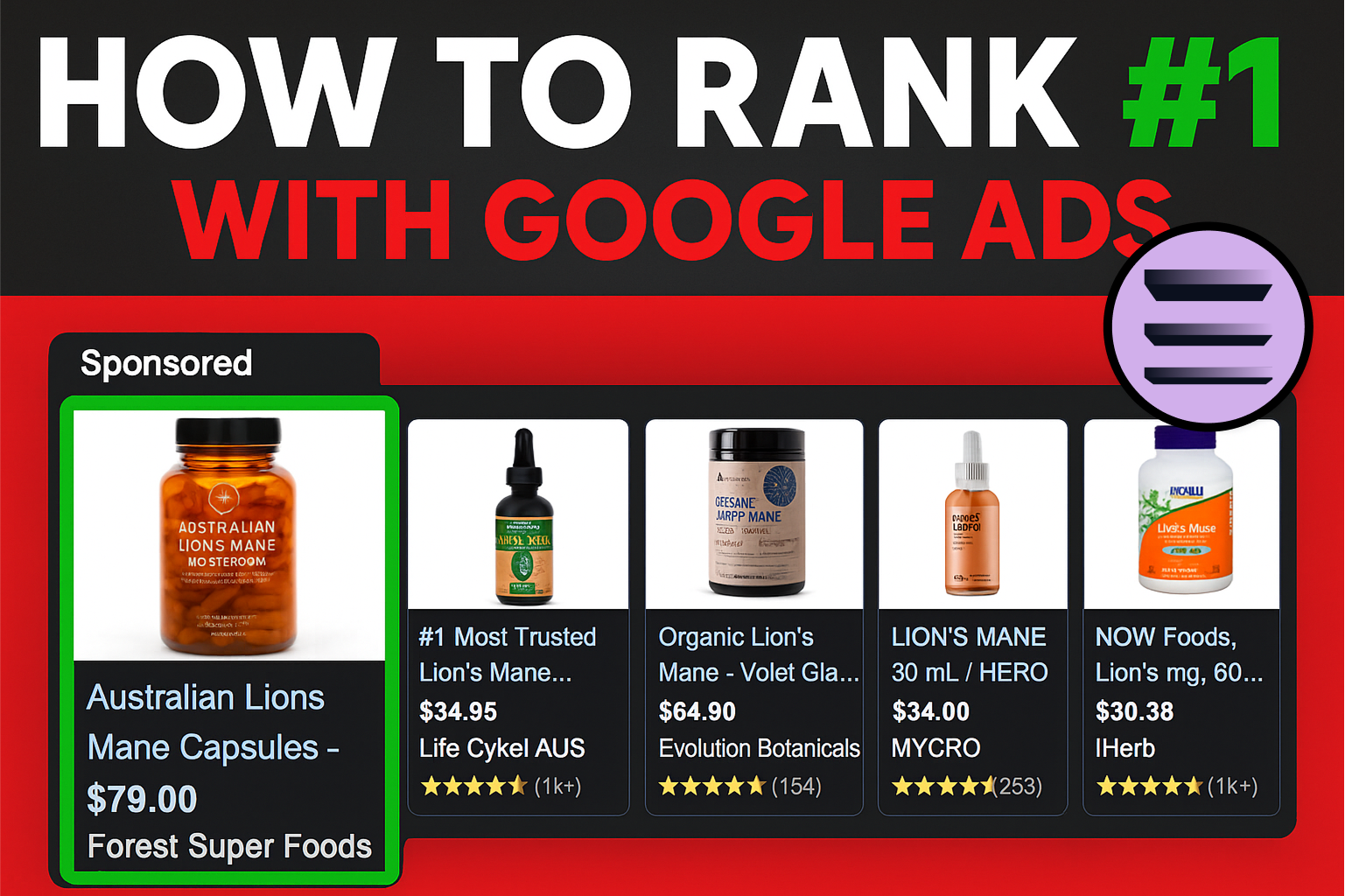
How to Rank #1 on Google Ads: Complete Shopping & Search Guide 2025
.png)
Learning Google Ads in 2025: The Roadmap Nobody Talks About
%20(1).png)
What Makes a Google Ads Specialist Worth $10,000/Month?

Why Cheap Google Ads Consulting Costs You $180,000+ in Lost Revenue
.png)
Why 99% of Google Ads Experts Fail (& How to Find One That Won’t)
.png)
5 Google Product Feed Fixes for eCom Growth
.png)
Google Ads Campaign Structure: Why 95% of Brands Waste Budget on Mixed Traffic

In-House vs Agency Google Ads: Which Delivers Better ROI in 2025?
.png)
How to Scale Google Ads With a Small Budget | Setup and Optimization

Google Shopping Optimization: 11 Proven Tactics for Maximum ROAS
%20(3).png)
eCom Growth Strategy: How We Scaled a Supplement Brand From $1.9M to $8.6M With Google Ads
%20(4).png)
Google Merchant Center Fix: How to Improve Rankings With Accurate Shipping Times

CTR Is Misunderstood by 95% of the PPC Industry (What to Optimise for Instead)
.png)
Google Ads AI | Manual vs Automated Campaign Performance

Complete YouTube Ads Guide 2025 | 3 Formats, 5 Principles, Proven Results
%20(2).png)
eCom Growth Strategy With Google Ads in 2025
.png)
Google Marketing Live 2025: 11 Key Takeaways for Marketers
%20(1).png)
YouTube Advertising Strategy: How to Drive Results Across Every Format
Google Shopping Feed Optimisation: Tips for Better Results

How Long Does it Take for Google Ads to Work?

YouTube Ads Analytics 101: Key Metrics and How to Use Them

Search Ad Strategies to Maximize Sales with Google ads for eCommerce (2024)

2025 Google Shopping Ads: Ultimate Guide, Benchmarks, and Pricing Breakdown

Maximizing ROI with Advanced Google Shopping Bid Strategies and Automated Bidding