
.svg)
Performance Max vs. Shopping Campaigns: Which One is Better?


Many eCom brands face the same dilemma: Performance Max vs. Standard Shopping. While Google heavily pushes Performance Max, many advertisers still defend the control that Standard Shopping offers.
Performance Max is built for automation and cross-channel scale, whereas Standard Shopping gives you full visibility and granular control over how your traffic is acquired. Neither is universally better. The right choice depends entirely on your goals, profit margins, data maturity, and how much control you are willing to hand over to Google's automation. In this article, we’ll break down where each campaign type excels, the biggest differences between them, and whether you should actually run them together.
Where Performance Max Works Best
Performance Max focuses on cross-channel reach and scaling. Unlike Standard Shopping, it works across Shopping, Search, YouTube, Display, Gmail, Maps, and Discover to find users likely to convert.
This multi-channel reach is why eCom brands use it for aggressive growth. However, the system can starve without the right fuel. PMax thrives in mature accounts that have stable conversion volume, large product catalogues, clean first-party data tracking, and high-quality creative assets.
If you have the budget to support the learning phase and a strong product feed, PMax can reach potential customers beyond traditional Shopping inventory and uncover additional conversion volume.
Where Standard Shopping Works Best
Standard Shopping is built for control and efficiency. Unlike Performance Max, it gives you far greater visibility into your search terms, allowing you to use negative keywords and adjust bids at a granular product level.
This predictability makes it the safest choice for accounts with smaller budgets, tighter margins, or limited historical conversion data. Because it focuses purely on high-intent search queries (product-focused) rather than experimenting across Display or YouTube, traffic is typically more closely tied to purchase intent.
It allows you to test product performance and feed optimisations based on clean, transparent traffic data. It also gives you a tactical advantage early on: starting with Manual CPC lets you control costs while the account gathers initial conversion data. Only after the campaign generates a steady stream of consistent sales does transitioning into Smart Bidding (like tROAS) becomes more stable and scalable.
The trade-off is scale, as Standard Shopping requires more manual maintenance and won’t expand as aggressively as PMax, but it provides a highly stable foundation.
Performance Max vs. Shopping: The Biggest Differences
Automation vs. Control
The core difference comes down to execution. Performance Max relies entirely on automation, meaning the system controls the bidding, placements, and targeting based on conversion probability. This reduces daily management time, but advertisers still have less visibility into optimisation decisions compared to Standard Shopping.
Standard Shopping works differently and gives advertisers more control. Even when using Smart Bidding, you still retain flexibility through negative keywords, product segmentation, and query filtering.
Ultimately, Performance Max gives Google the freedom to find conversions across its entire network, while Standard Shopping gives you far more control over how those conversions are acquired and how efficiently budget is spent.
Search Query Visibility
Search query transparency is one of the primary reasons advertisers still use Standard Shopping campaigns. It gives you direct visibility into the exact search terms triggering your ads, making it easy to isolate high-intent queries, exclude irrelevant traffic, and see exactly where your budget is going. This granularity is essential for eCom accounts with tight margins, where traffic quality directly dictates profitability.
Performance Max also provides search term reporting, but the visibility is still more limited than in Standard Shopping. While advertisers can review search terms, the data is aggregated across the campaign, making it difficult to understand how individual search terms perform within specific asset groups or across different Google channels. Advertisers also have limited visibility into whether a query triggered ads on Search, Shopping, or other placements, which makes performance analysis less detailed than in Standard Shopping.
While Google has introduced additional reporting and visibility features over time, including Search Terms Insights, Channel Performance, and asset-level reporting, Performance Max still relies more heavily on automated optimisation and offers less granular insight into query-level performance than Standard Shopping.
Scaling Potential
Performance Max is built for rapid, aggressive scaling. Because it operates across Google’s entire ecosystem, it has access to significantly more inventory than Standard Shopping. When your Standard Shopping campaigns hit a performance ceiling, Performance Max can continue scaling by reaching users outside traditional high-intent Shopping searches across Google’s wider network.
Standard Shopping scales much more conservatively. Growth is tied directly to search volume and intent, meaning expansion is predictable. While this helps prevent budget waste and maintains efficiency, it also limits how aggressively you can push for higher volume. Performance Max trades predictability for volume, while Standard Shopping trades fast scaling for margin protection.
Creative Requirements
For Standard Shopping, creative requirements are heavily centred around your Google Merchant Center feed. Your performance is driven by technical optimisation – product titles, accurate pricing, and clean product imagery all directly influence how often your products appear in competitive Shopping searches. The ads themselves are largely standardised, meaning success depends more on matching the right product to the right search intent than on compelling ad copy.
Performance Max shifts the focus heavily towards creative asset quality. Because it serves ads across diverse placements, the system relies on headlines, descriptions, images, and video assets alongside your product feed. Google dynamically mixes and matches these assets depending on the placement.
If your asset groups are weak or incomplete, the algorithm has far less to work with across visual placements, which can severely limit your scaling potential. Worse, if you do not provide a high-quality video, Google will auto-generate one using your images and text, which often looks robotic and can actively harm your brand perception.
“High ROAS does not automatically mean profitable growth. Performance Max can look exceptional inside Google Ads while mostly recycling branded demand and warm remarketing traffic. A strong ROAS inside Google Ads means very little if the business itself is not growing profitably.”
ROAS vs. Actual Profitability
Higher reported ROAS does not automatically equal higher profitability. This distinction is critical when comparing these two campaign types.
Performance Max often delivers exceptionally high dashboard ROAS because the algorithm aggressively captures existing demand – specifically through branded search terms and remarketing audiences. While the numbers look great on paper, PMax is often just claiming conversions that would have happened organically or via direct traffic anyway. It inflates platform metrics without necessarily driving new revenue.
This happens because branded traffic naturally converts at a massive rate for a fraction of the cost. This does not automatically make Performance Max ineffective. Branded search and remarketing can still be highly profitable. The issue is when advertisers mistake captured demand for incremental growth. When PMax mixes this high-converting brand traffic with cold prospecting traffic, it masks how the campaign is actually performing. Only when you separate your brand and non-brand traffic do you see the real picture: whether the campaign is genuinely winning new customers or just recycling old ones.
Here’s an example from a client we audited:
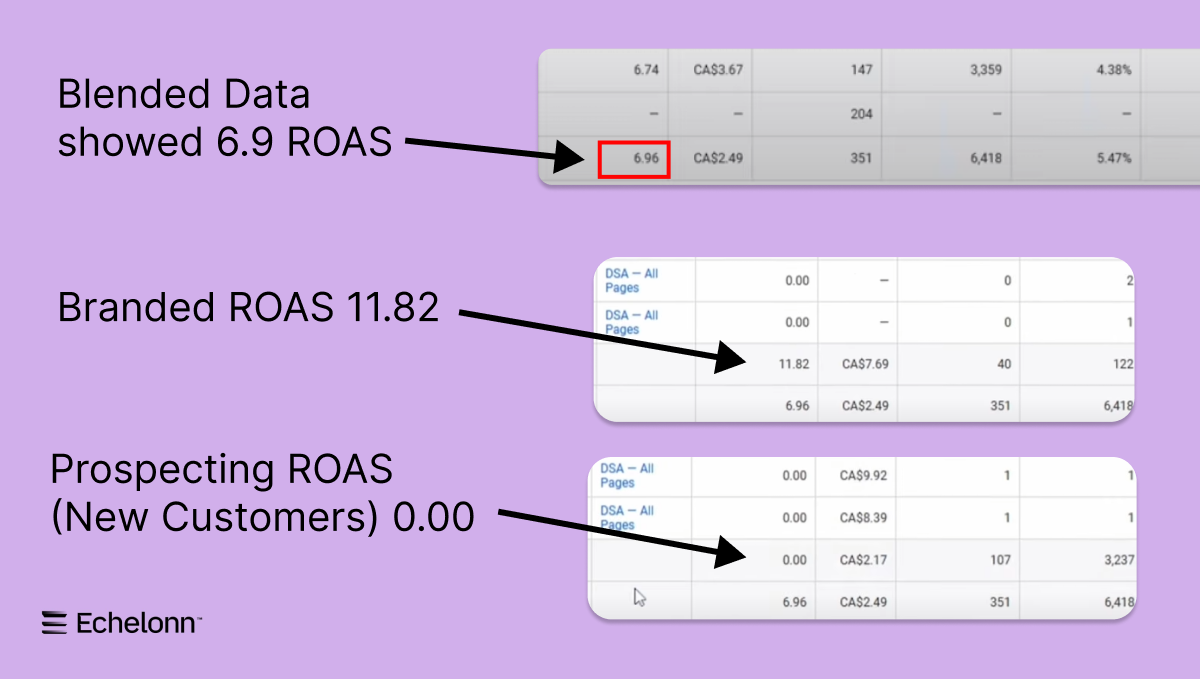
Standard Shopping gives you a much clearer view of how efficiently you acquire customers. Because you control search queries, you can easily exclude your brand name and see if your ads are driving actual new sales. This gives you a much more accurate view of your actual profit margins after all expenses. A campaign can look highly efficient inside Google Ads while generating very little actual profit, which is why optimising around business margins always beats chasing platform-level ROAS.
Should You Run Performance Max and Shopping Together?
In many cases, yes. The most effective strategy rarely involves choosing one over the other. Instead, many eCom accounts run both campaigns simultaneously to balance efficiency and scale. You can use Standard Shopping to capture high-intent search traffic predictably for your core products, while running Performance Max for a completely different set of products to expand reach across YouTube, Display, and Discover.
The danger lies in poor structure. If you target the same products in both campaigns, they will compete against each other. Without proper segmentation, PMax can absorb a large portion of your Shopping traffic, which can mess up your data, and waste your budget. To make them work together, you must split your products so that no single product is active in both campaigns at the same time.
A smart way to split them is by product performance or profit margin. Put your best-sellers into Standard Shopping so you can tightly control how much you spend to sell them. Then, push the rest of your catalogue into PMax to scale beyond traditional Shopping inventory. This gives you the best of both worlds: control over your main revenue and automated scaling where you need it.
We’ve used this exact margin-based SKU segmentation strategy across multiple eCom accounts, including home decor brand Casa & Beyond. The result was growth from $1.27M to $6.25M in Google Ads revenue while maintaining stable profitability throughout the scaling process.
Final Takeaway: The Choice Depends on What You Optimise for
The biggest mistake is treating these campaigns as direct replacements of each other. Instead of forcing one to do the job of the other, use them together by splitting your products based on performance.
If your immediate focus is tight profit margins, search query control, and greater optimisation, Standard Shopping holds the advantage. If you want to scale beyond traditional search traffic and have the creative assets to support it, Performance Max can unlock that extra volume.
Ultimately, no campaign structure can save a broken setup. Clean tracking, an optimised product feed, and a website that actually converts matter more than which button you click inside Google Ads. Fix your marketing fundamentals first, and only then choose the campaign type that matches your profit goals.

Ready To Start Scaling Today?
Scaling Your Favorite eCommerce Brands To The Highest Levels Through Google & YouTube Ads.

.svg)
Get Smarter About How To Scale Your Brand...
Discover Insider Knowledge On How We Scale Brands From 7 Figures All The Way Up To 8-9 Figures With Google Ads.
.svg)
.svg)
"The best Google ads agency there is. You only need to look at the quality of clients and the reviews to understand Jackson and his team are the real deal."

"One of the best in the agency space, great service and exceptional results. Since signing on with Jackson he has become one of our greatest assets when scaling."

"Top tier team & service delivery. Jackson is relentless when it comes to fulfilment & client needs. His attention to detail during the onboarding process ensured exponential results for my coaching business. If you're looking to elevate your ad results & learn a tone of new options/skills that can be implemented to drive more sales to your business then I'd strongly recommend Echelonn."

"From the very first conversation with Jackson and his team, it was clear that we had found a Google Ads agency that prioritises results above all else. Their collaboration between data-driven experts and a skilled copywriter creates a dynamic duo for Google advertising success..."

"Been working with them for 9 months and it's been a great experience. Jackson and his team know what they are doing and always goes above and beyond. If you're looking for a reliable Google ads agency this is the one."

"The best Google ads agency there is. You only need to look at the quality of clients and the reviews to understand Jackson and his team are the real deal."
"One of the best in the agency space, great service and exceptional results. Since signing on with Jackson he has become one of our greatest assets when scaling."
"Top tier team & service delivery. Jackson is relentless when it comes to fulfilment & client needs. His attention to detail during the onboarding process ensured exponential results for my coaching business. If you're looking to elevate your ad results & learn a tone of new options/skills that can be implemented to drive more sales to your business then I'd strongly recommend Echelonn."
"From the very first conversation with Jackson and his team, it was clear that we had found a Google Ads agency that prioritises results above all else. Their collaboration between data-driven experts and a skilled copywriter creates a dynamic duo for Google advertising success..."
"Been working with them for 9 months and it's been a great experience. Jackson and his team know what they are doing and always goes above and beyond. If you're looking for a reliable Google ads agency this is the one."
More Articles Like This.
Find answers to common queries about our services and how we can help you.
.svg)
Performance Max Audience Signals Explained
Google Ads Optimization Score: Should You Trust It?
What Is a Good CTR for Google Ads?
Why More Google Ads Spend Doesn't Always Mean More Revenue
How To Rank Your Google Shopping Ads Multiple Times
Why Your Google Ads Scale Breaks After $X Per Day
How to Tell if Your Google Ads Agency Is Underperforming
Why Your Performance Max Campaign Gets Clicks but No Sales
.png)
Why Your Google Ads Budget Isn't Spending (And How to Fix It)

The Right Way to Run Google Dynamic Search Ads
How to Get New Customers With Google Ads in 2026
Why Your Google Ads CPA Keeps Increasing and How to Reduce It
What Is a Good ROAS for eCommerce Businesses?
How to Set Up Google Ads Conversion Tracking the Right Way
How Much Does a Google Ads Agency Cost?
Why Your Google Ads Are Not Converting
.png)
Average CPC in Google Ads by Industry (And What It Means for Your Strategy)
Performance Max vs. Shopping Campaigns: Which One is Better?

Why Your Google Shopping Ads Get Impressions But No Clicks (Image Optimization Guide)
Why Your Google Ads Are Not Showing

YouTube Ads Targeting Framework That's Driven $10M+ for eCommerce Brands

What Professional Google Shopping Ads Management Looks Like
How Much Do Google Ads Cost in 2026?

Should Your Business Use Google Search Ads or Performance Max?

Performance Max Best Practices for Sustainable Growth
.png)
Google Shopping Ads Audience Targeting: What Actually Impacts Performance
.png)
How to Write Google Search Ads That Actually Convert
.png)
6 Google Shopping Feed Best Practices That Drive Better ROAS
%20(1).png)
How to Get Your Products Recommended by AI (ChatGPT, Google AI & More)
.png)
Common Google Ads Myths That Cost Businesses Money
.png)
7 Benefits of Google Shopping Ads for Your eCommerce Business
.png)
How to Switch Google Ads Agency Without Losing Performance or Data
.png)
Demand Capture vs Demand Generation: Where Google Ads Fits
.png)
How to Prepare Your Business for Working With a Google Ads Agency

How to Avoid Wasting Budget on the Wrong Searches With Google Ads Keyword Match Types
Google Ads Account Ownership: What Businesses Should Know Before Hiring an Agency
.png)
Landing Page Optimization Strategies That Increase Conversions
SEO and Google Ads: How Search Engine Optimization and Paid Search Work Together
Types of Remarketing in Google Ads: How Each One Works and When to Use It
Google Ads Keyword Research: How to Find Keywords That Actually Convert
.png)
What Is Google Performance Max and How Does It Work?
.png)
How Advertorials Support High-Intent Google Ads Funnels
%20(Canva%20Template).png)
How Audience Targeting Works in Google Search Ads (and When to Use It)

Google Ads for New Brands: What to Know Before Spending Your First Dollar
.png)
What Is a PPC Agency – and When It Makes Sense to Hire One
.png)
How to Improve Your Google Ads Conversion Rate

.png)
The Right Way to Link Shopify and Google Ads for Scalable Growth
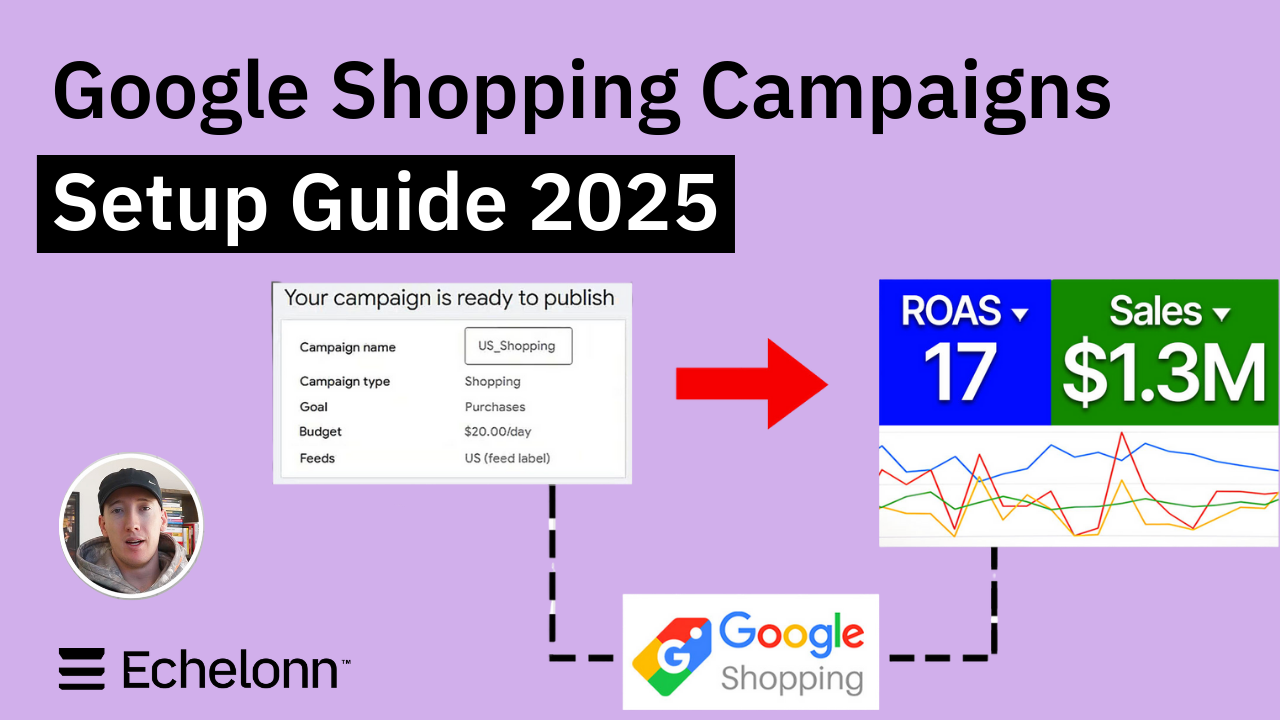
Google Shopping Campaigns Setup Guide 2025
Confessions of a Google Ads Auditor: The Worst Mistakes We See Inside eCom Accounts

How to Spy on Competitor Google Ads: Complete 2025 Guide
%20(2).png)
7 Questions to Ask Before Hiring a Google Ads Consultant
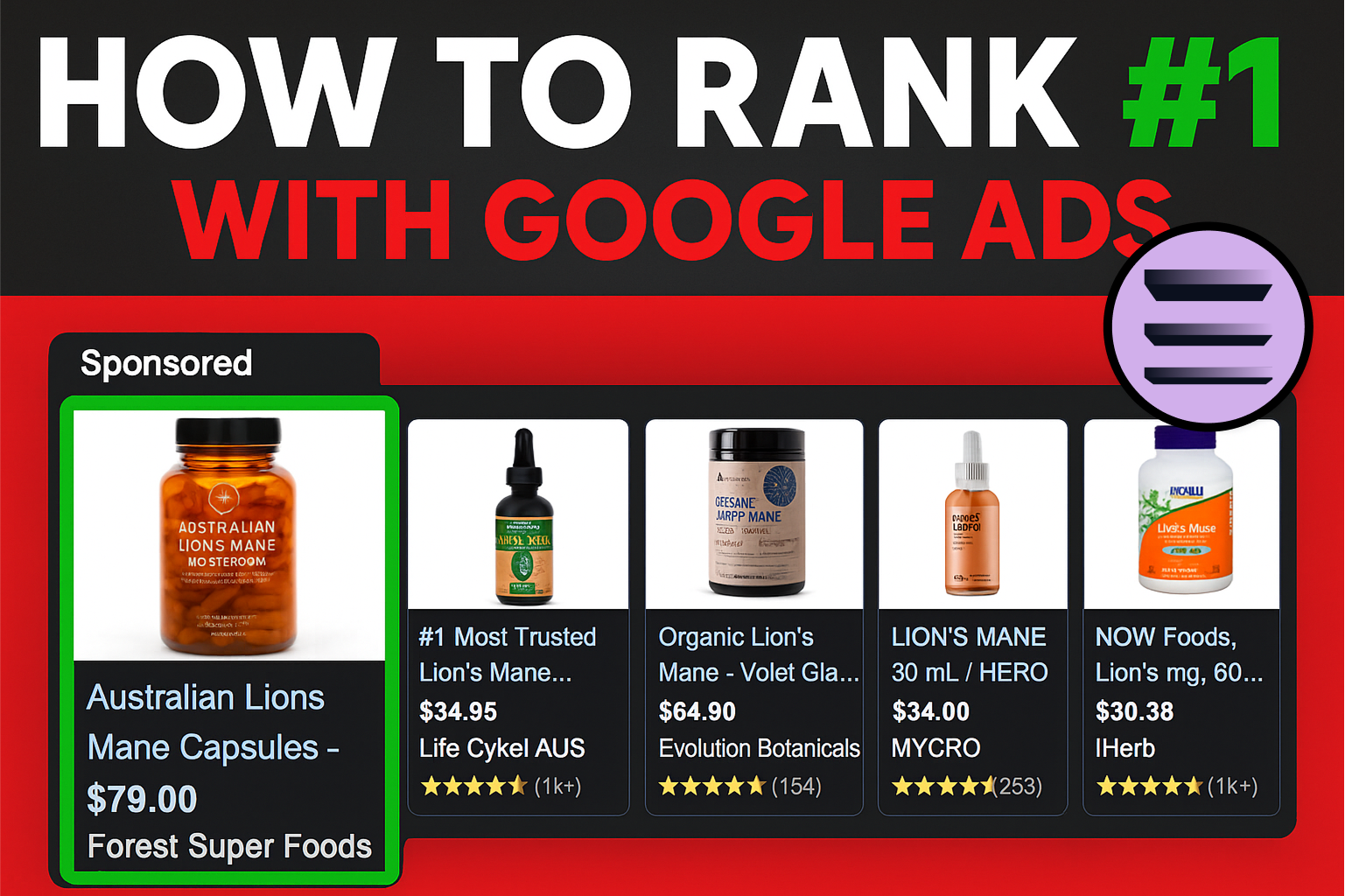
How to Rank #1 on Google Ads: Complete Shopping & Search Guide 2025
.png)
Learning Google Ads in 2025: The Roadmap Nobody Talks About
%20(1).png)
What Makes a Google Ads Specialist Worth $10,000/Month?

Why Cheap Google Ads Consulting Costs You $180,000+ in Lost Revenue
.png)
Why 99% of Google Ads Experts Fail (& How to Find One That Won’t)
.png)
5 Google Product Feed Fixes for eCom Growth
.png)
Google Ads Campaign Structure: Why 95% of Brands Waste Budget on Mixed Traffic

In-House vs Agency Google Ads: Which Delivers Better ROI in 2025?
.png)
How to Scale Google Ads With a Small Budget | Setup and Optimization

Google Shopping Optimization: 11 Proven Tactics for Maximum ROAS
%20(3).png)
eCom Growth Strategy: How We Scaled a Supplement Brand From $1.9M to $8.6M With Google Ads
%20(4).png)
Google Merchant Center Fix: How to Improve Rankings With Accurate Shipping Times

CTR Is Misunderstood by 95% of the PPC Industry (What to Optimise for Instead)
.png)
Google Ads AI | Manual vs Automated Campaign Performance

Complete YouTube Ads Guide 2025 | 3 Formats, 5 Principles, Proven Results
%20(2).png)
eCom Growth Strategy With Google Ads in 2025
.png)
Google Marketing Live 2025: 11 Key Takeaways for Marketers
%20(1).png)
YouTube Advertising Strategy: How to Drive Results Across Every Format
Google Shopping Feed Optimisation: Tips for Better Results

How Long Does it Take for Google Ads to Work?

Search Ad Strategies to Maximize Sales with Google ads for eCommerce (2024)

2025 Google Shopping Ads: Ultimate Guide, Benchmarks, and Pricing Breakdown

Maximizing ROI with Advanced Google Shopping Bid Strategies and Automated Bidding